 Merry Japan Tours
BLOG
A glimpse into the Gion Festival
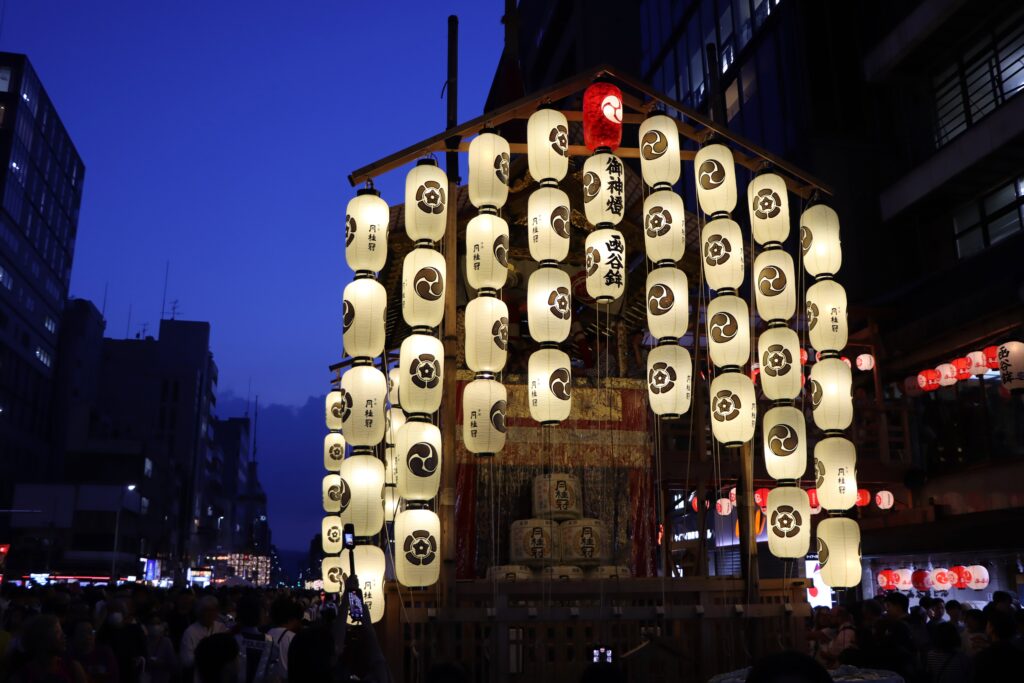
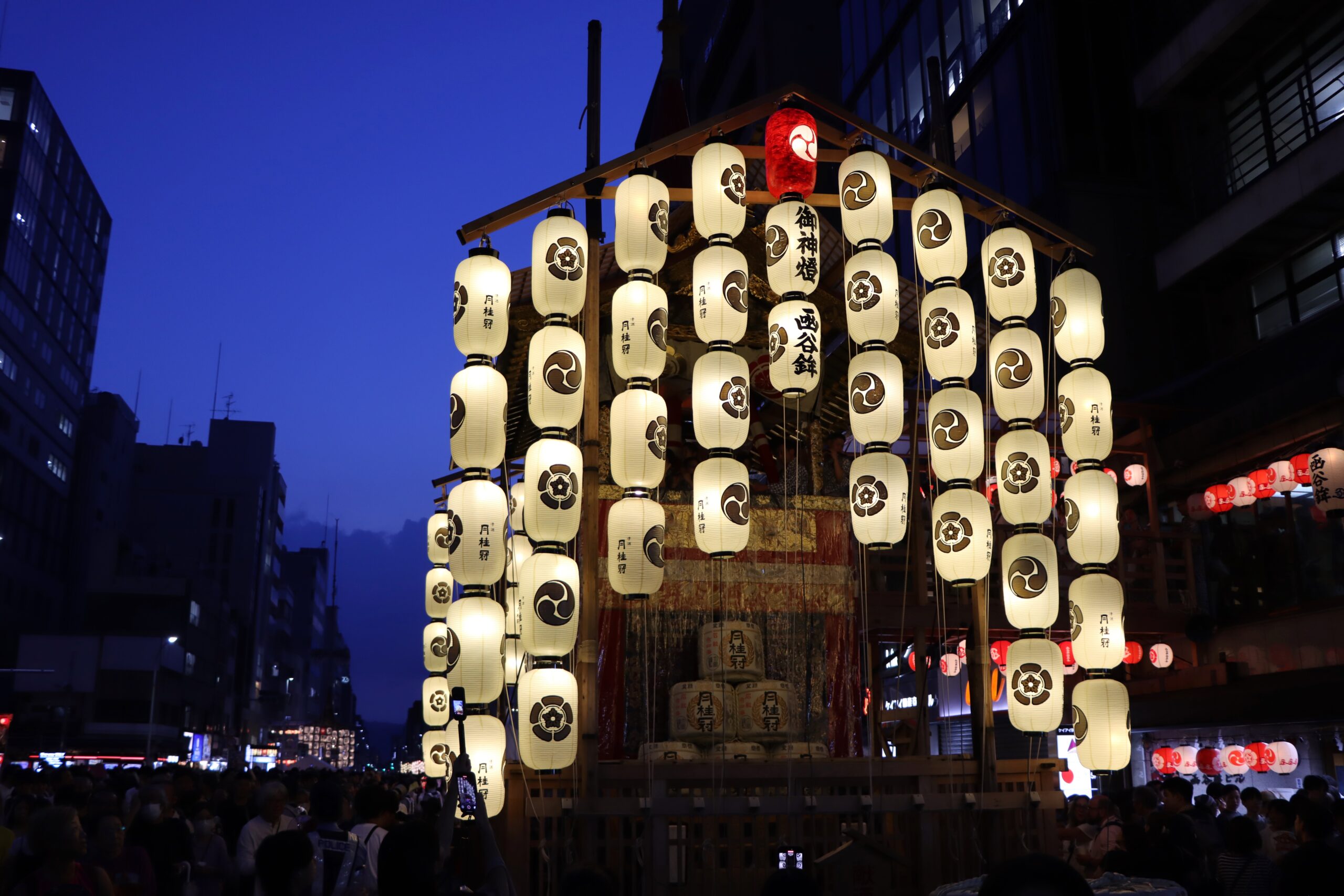
Dedicated to Yasaka Shrine, the Gion Festival is one of the three greatest festivals in Kyoto, along with the Jidai Festival in Heian-jingu Shrine and the Aoi Festival in Shimogamo and Kamigamo Shrines. It culminates in the procession of Yamahoko floats, which are paraded through the city on July 17th, and are intended to drive out evil spirits. This festival originated in 869 when Kyoto suffered from a series of raging plagues, and the people prayed for the extermination of misfortunes. The onset of the Onin War, which lasted from 1467 to 1477, caused it to be halted; however, this festival was revived in 1500 by the townspeople of Kyoto.
Registered as a UNESCO Intangible Cultural Heritage in 2009, this festival is far more than just one of the cultural icons in summer. It’s a tradition that has been handed down over generations with meticulous care and pride, and perhaps is of utmost supremacy over other festivals in Kyoto due to its cultural importance and attendance by people from all over.
Muggy as it may be, this festival attracts millions of spectators throughout the entire month of July. Once you go out to Shijo Boulevard, where a bunch of other people make their way through the crowd to watch the gorgeous Yamahoko floats, you may lose track of time and get carried away with the food and drink sold at stalls that pop up on July 15th and 16th.
Contents
- 1 The Shijo Boulevard turns into a paradise free of vehicles.
- 2 Let’s enjoy watching various types of gorgeous floats!
- 3 The Naginatahoko float is in a class by itself.
- 4 If you want to beat the crowd, go to the Musouyama float!
- 5 The Funehoko float for safe delivery
- 6 The long-standing Hoshoyama float is a must to make your romantic wish come true.
- 7 Music is key to warding off plagues.
- 8 Welcome aboard the Yamahoko float!
- 9 Sake also holds the key to happiness.
- 10 Paint the town red—that’s the spirit!
The Shijo Boulevard turns into a paradise free of vehicles.
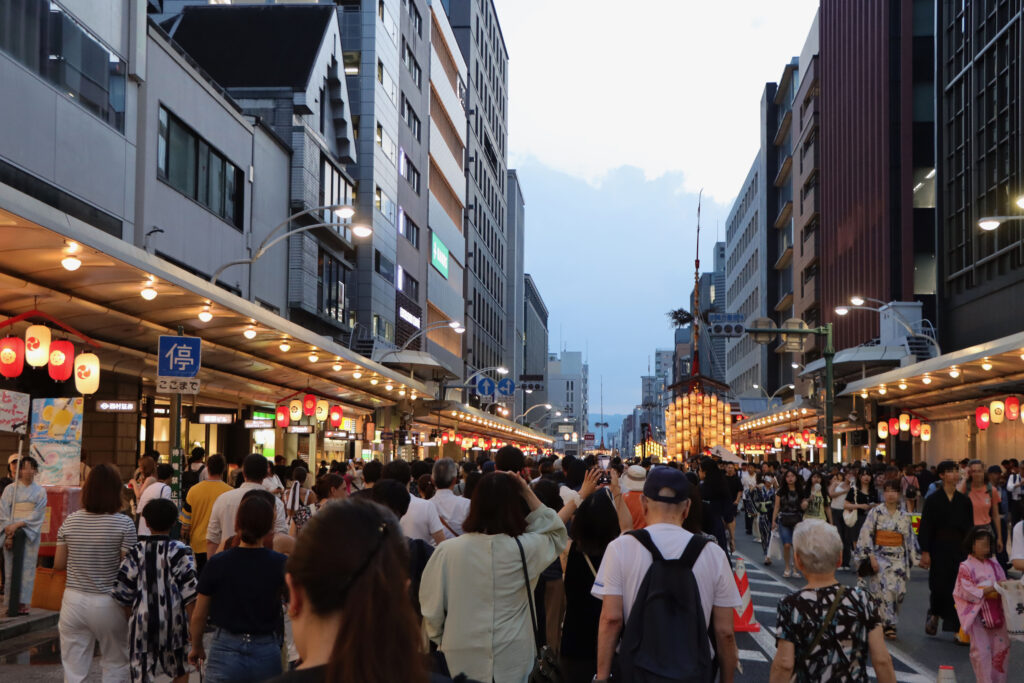
Upon arrival at Shijo Boulevard, which is lined with world-famous brand outlets such as ‘Patagonia’ and ‘Starbucks’, you will be overwhelmed by the sight of the extensive vehicle-free areas. Millions of spectators gather in Kyoto city to watch the Yamahoko floats, which are displayed until the 17th, when they are paraded through the city.
Here’s some advice that may make you comfortable during the festival: Though there are some restrooms in the city, the city is extremely crowded, so it is recommended that you go to the restroom in your hotel before leaving.
Additionally, if you happen to be around at dinner time, it would be a good idea to grab a beer and some street food sold at stalls instead of having dinner at a restaurant, because it would be a once-in-a-lifetime opportunity for you to relish the taste of the local street food.
There’s just one thing you need to pay attention to; as mentioned previously, the streets become vehicle-free from the late afternoons of July 15th and 16th, so you are not allowed to cycle in the city center. If you are on a bicycle, a police officer may ask you to get off your bicycle.
Let’s enjoy watching various types of gorgeous floats!
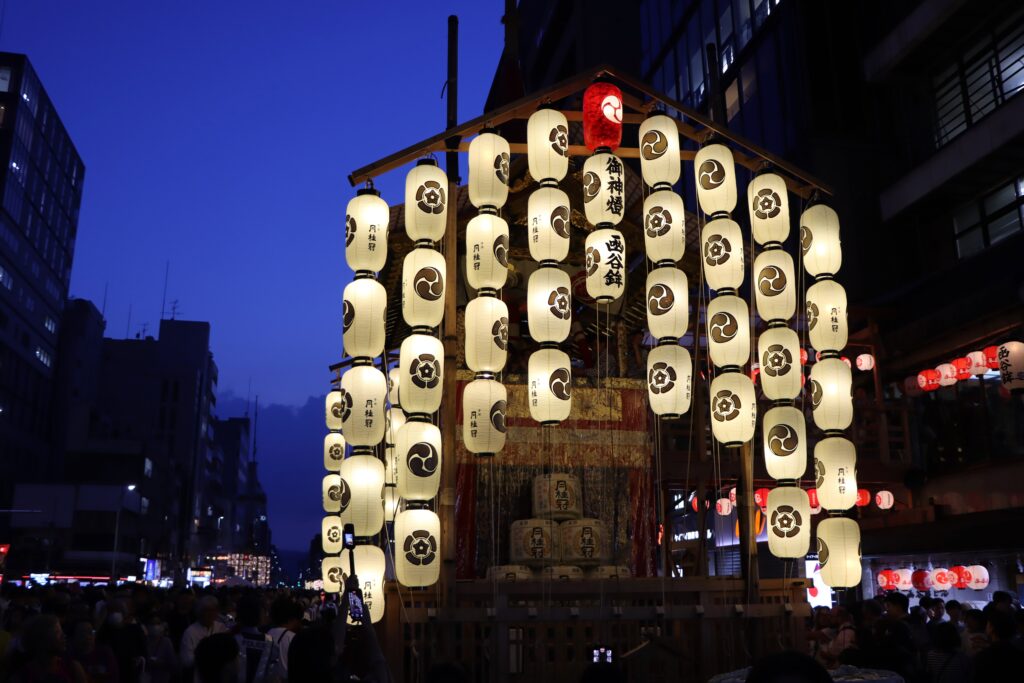
Yamahoko floats that catch everyone’s fancy are sometimes dubbed “moving museums” due to their gorgeous ornamentation, including tapestries which were brought from China, Persia, and Belgium.
It is shrouded in mystery how these tapestries were brought into Kyoto in the Edo period, when Japan had adopted a national seclusion policy. When you see these priceless tapestries, you will sense something exotic about them. It’s quite natural because some of the tapestries’ motifs are based on historical events or monuments in foreign countries, such as a scene from the Old Testament, the Pyramids, or a Palace in Baghdad.
Every float has its own meaning and history—something that may well add to your excitement. If you discover your favorite stories behind the long-established floats beforehand, please go directly to your favorite float to save time. It’s said that it’s nearly impossible or not highly recommended to visit all the floats in just one day. Thus, it is suggested that you take your valuable time into account during your visit to the Gion Festival.
The Naginatahoko float is in a class by itself.
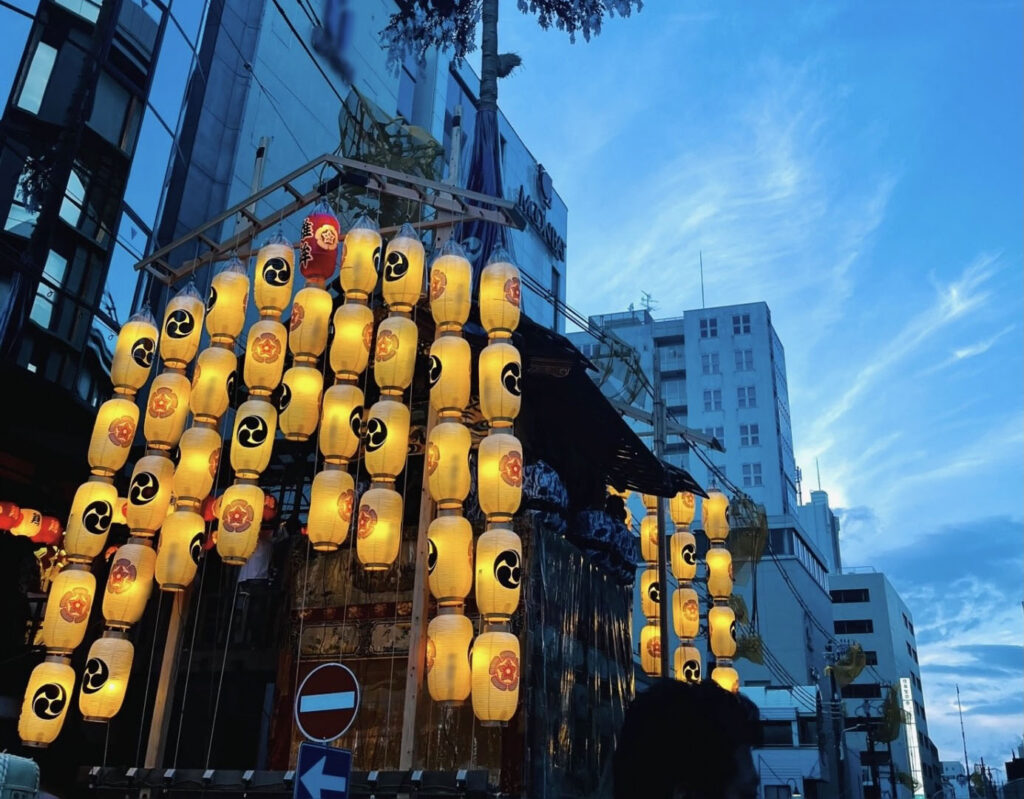
In general, the order of the parade is decided by drawing lots on July 2nd. This custom originated in the Muromachi period, which dates back over 500 years. This period is characterized by political upheavals, so anyone can easily imagine that the order of the parade mattered a lot; lots of fights and conflicts could have occurred over which float went first. To avoid such fights and conflicts, the lot system came into being.
However, the Naginatahoko float, which stands at the forefront of the festival, is excluded from the lot system, suggesting that the Naginatahoko float has the privilege of taking the lead every year. The float then makes its way back to Yasaka Shrine. The name ‘Naginata’ means a long sword and is considered to have magical power to drive out evil spirits.
If you want to beat the crowd, go to the Musouyama float!
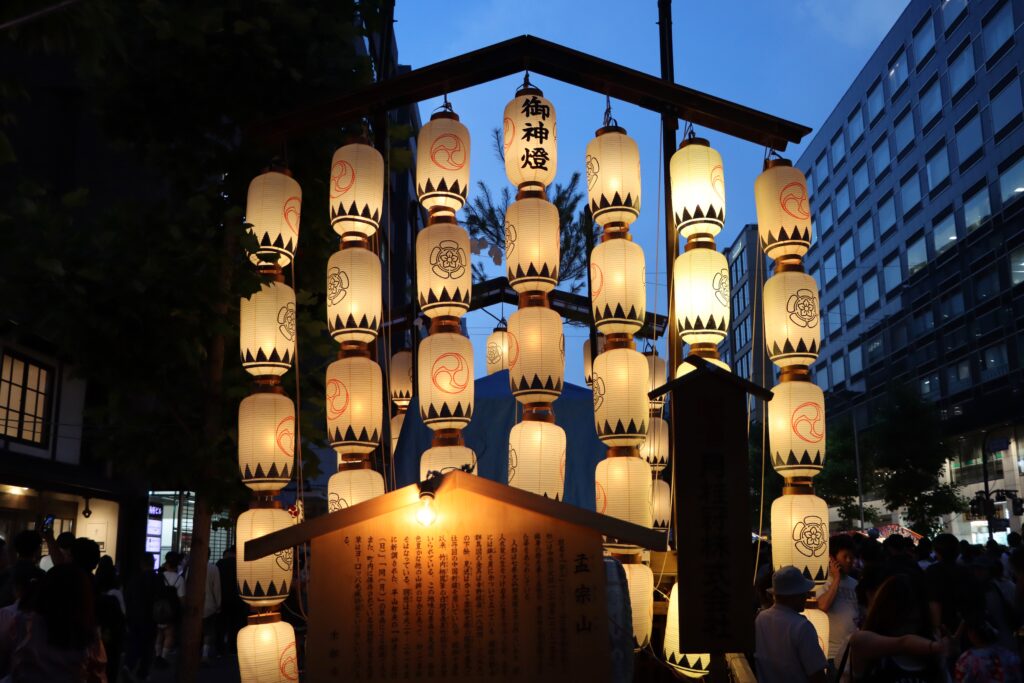
The Mousouyama float is also fascinating. It’s small, but still holds dignity and majesty. The name of this float is also derived from a Chinese anecdote. This float has been chosen to parade second after the Naginatahoko float over 10 times since the Second World War. If you get off at Hankyu Karasuma Station, it’s on the right at the Karasuma intersection. The place near the float is less crowded than the Shijo Boulevard, so if you feel inclined to make yourself at home near a beautiful float, resting at the Musouyama float and taking photos with it sounds like a plan.
The Funehoko float for safe delivery
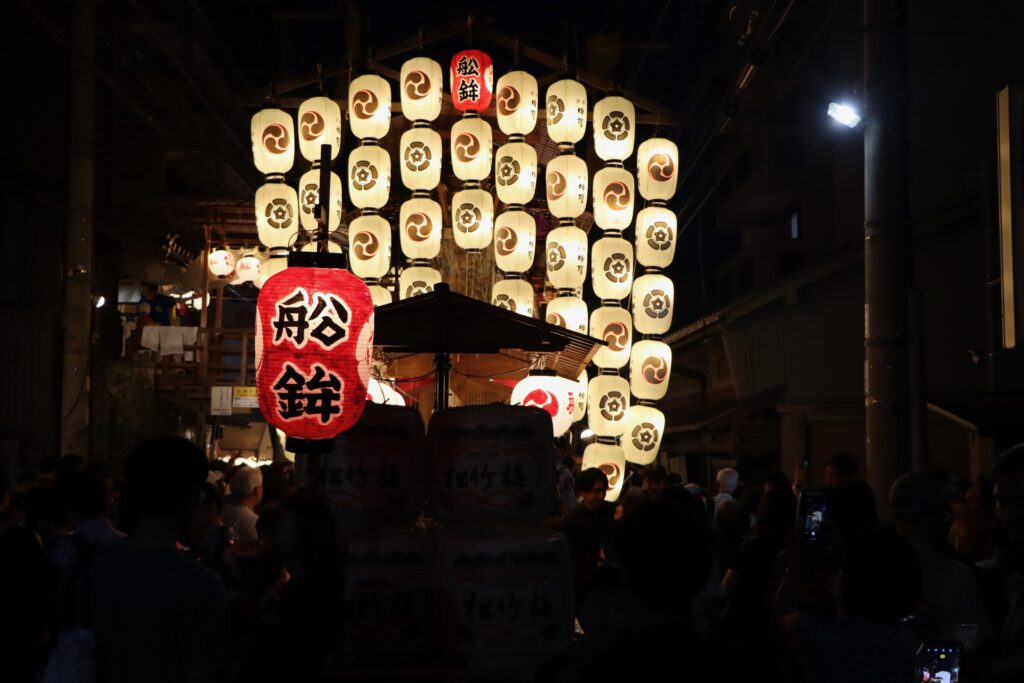
Measuring 6.48m in height, the Funehoko float is different from the other floats in terms of its shape. The name, ‘Fune,’ literally means a ship, and the float is built in the shape of an ancient ship. This float enshrines Empress Jingu and the god of the sea.
Not only ordinary people but also courtiers have revered Empress Jingu because expectant mothers can receive benefits such as an easy childbirth, so Empress Jingu is now worshipped as the Goddess of safe delivery. It’s worth mentioning that this float once entered the Imperial Palace on the occasion of Emperor Meiji’s birth. The Iwata obi sashes attached to the statue of the goddess are the symbol of safe delivery and are given out to pregnant women after the Gion Festival.
The long-standing Hoshoyama float is a must to make your romantic wish come true.
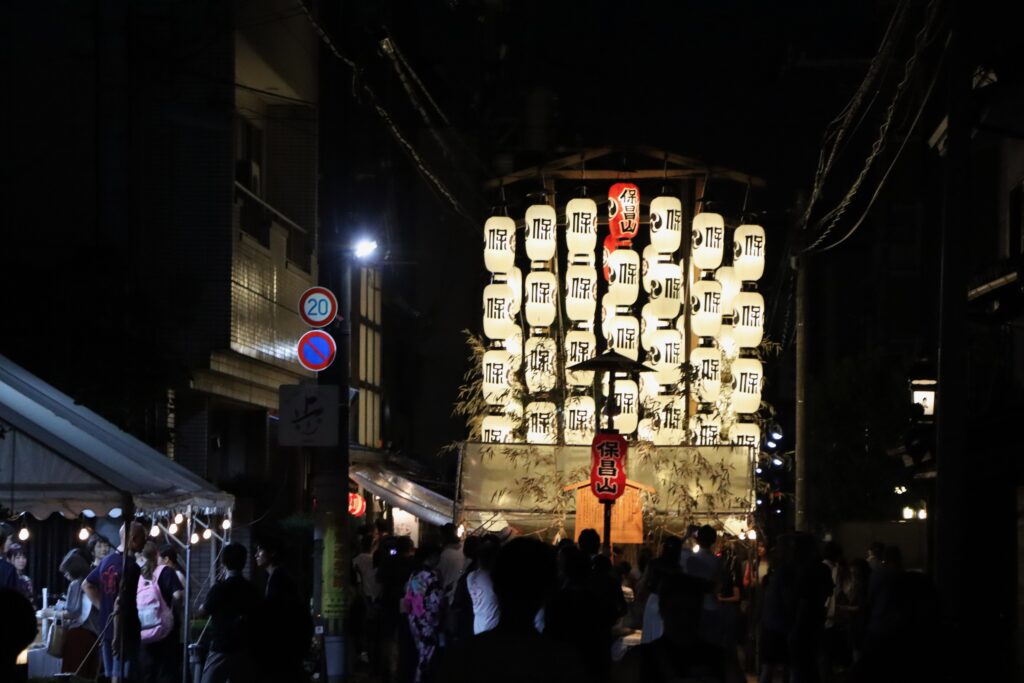
Once upon a time, a retainer of the shogun Yorimitsu, named Sukemasa Hirai, had a crush on Shikibu Izumi, a renowned poet at that time. He kept sending love letters to her, but in vain.
To put him to the love test, one day Shikibu replied to his letter, ordering him to break off a small branch from a plum tree, which was in full bloom within the compound of the Imperial Palace, and send it to her—the hardest task that she could have thought of ever at that time. Apparently, she must have thought that it was impossible, and she would be able to fend off the affections from him.
Sukemasa went all out to live up to it and broke into the palace to steal a plum branch. Successful as it was, when he was running away with the plum branch, he was injured by arrows from a guard. Though injured, Sukemasa made it, and finally, she realized that his feelings for her proved to be authentic, leading to a happy marriage. Because of this story, this float is now very popular, attracting thousands of suitors who want to make their romantic wishes come true.
Music is key to warding off plagues.
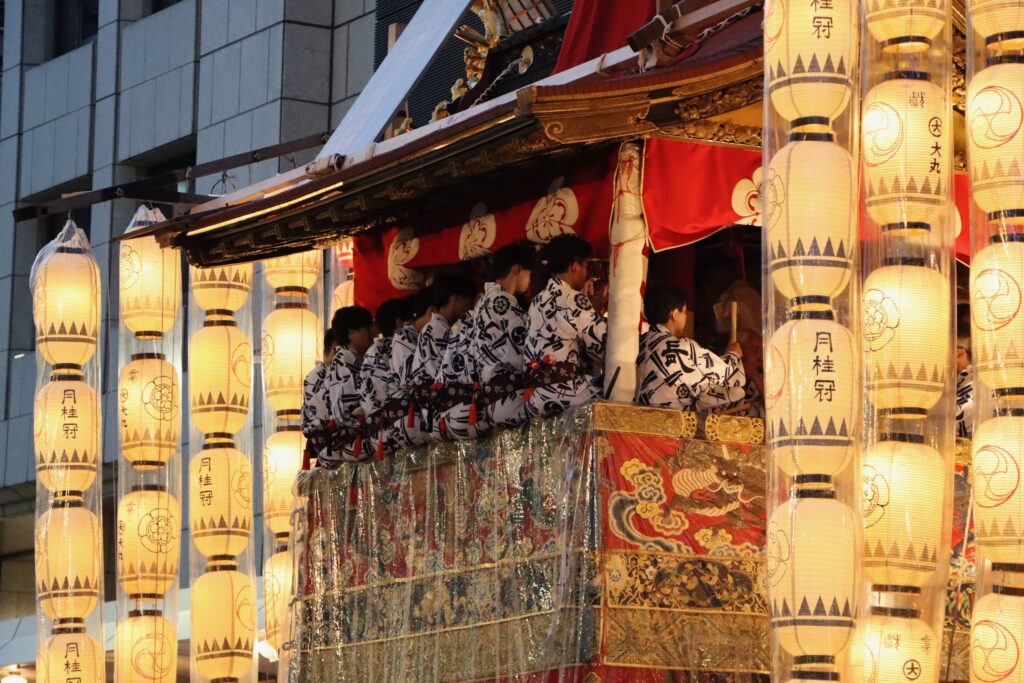
One of the main aims of this festival is to ward off plagues. Music has been considered to be effective for such a purpose, especially when played by children. This music is known as “Konchikichin,” and is one of the summer traditions in Kyoto. The way of warding off plagues is unique and worth noting here. Plagues have been considered to be the act of evil spirits, and the sound of Japanese drums, flutes, and gongs is believed to attract evil spirits. After luring bad spirits who are believed to spread epidemics into the floats, they are taken back to the Yamahoko town, where they are gotten rid of.
Welcome aboard the Yamahoko float!
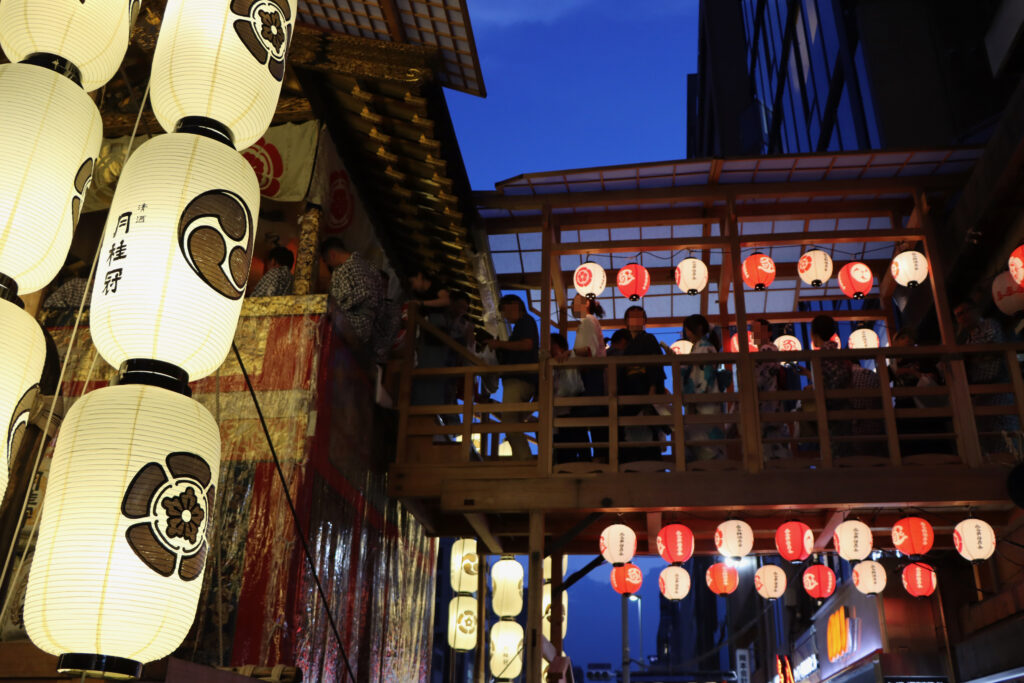
In general, you are not allowed to enter most of the Yamahoko floats, but some Yamahoko floats are not just for viewing; you can enter them by buying “Chimaki,” which are rice dumplings wrapped in bamboo leaves, and take memorable photos inside. Chimaki might look like food, but you can’t eat it. It’s a good luck charm against disease and calamity. Lots of people buy this talisman and display it at their front doors for a year.
Of course, women are allowed to enter some floats, except the Naginata float and the Houkahoko float, for religious reasons—something that has been associated with Buddhism.
Not only can you enjoy taking photos inside, but it’s said that you can receive benefits such as good luck, good health, and so forth just by entering some of the floats.
Sake also holds the key to happiness.
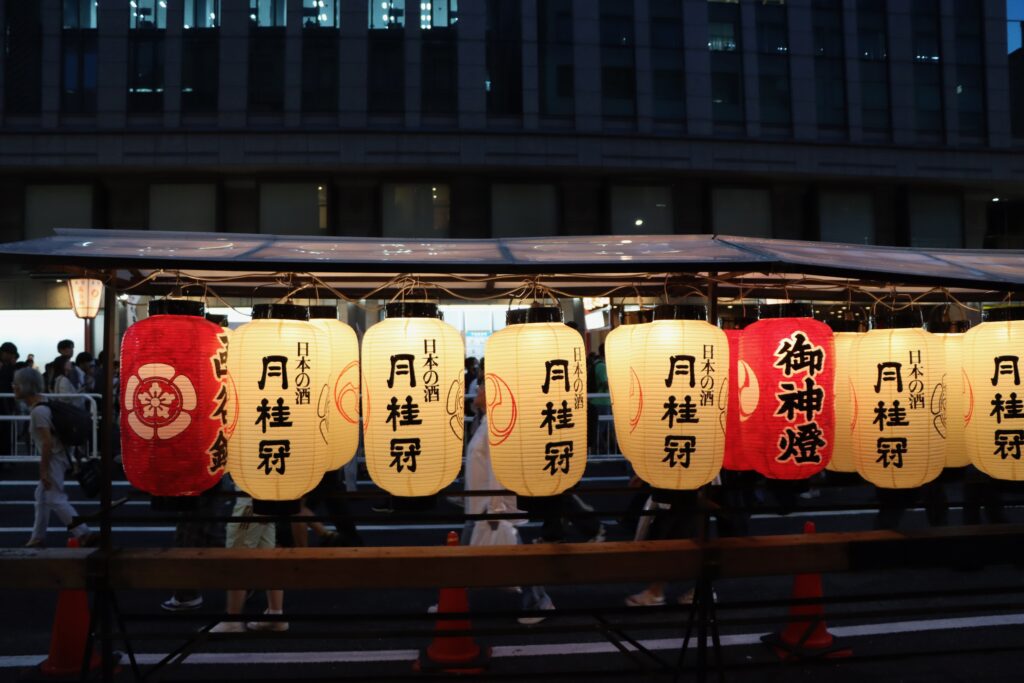
Japanese people have always thought of sake as something special, divine, and good for health. There’s even a saying, which goes “Sake is the king of all medicines.” Drinking too much will make you feel dizzy, though, or give you a headache, or a hangover.
During the Gion festival, lots of sake breweries contribute casks filled with sake to the Yamahoko floats, demonstrating that sake is important for purification. Among them, ‘Gekkeikan’ is one of the main contributors to this festival.
Actually, it is scientifically proven that we can feel relaxed or calm by drinking sake from a cask, which is made of cedar; the scent of cedar has sedative effects, making for relaxation and a good night’s sleep.
Paint the town red—that’s the spirit!
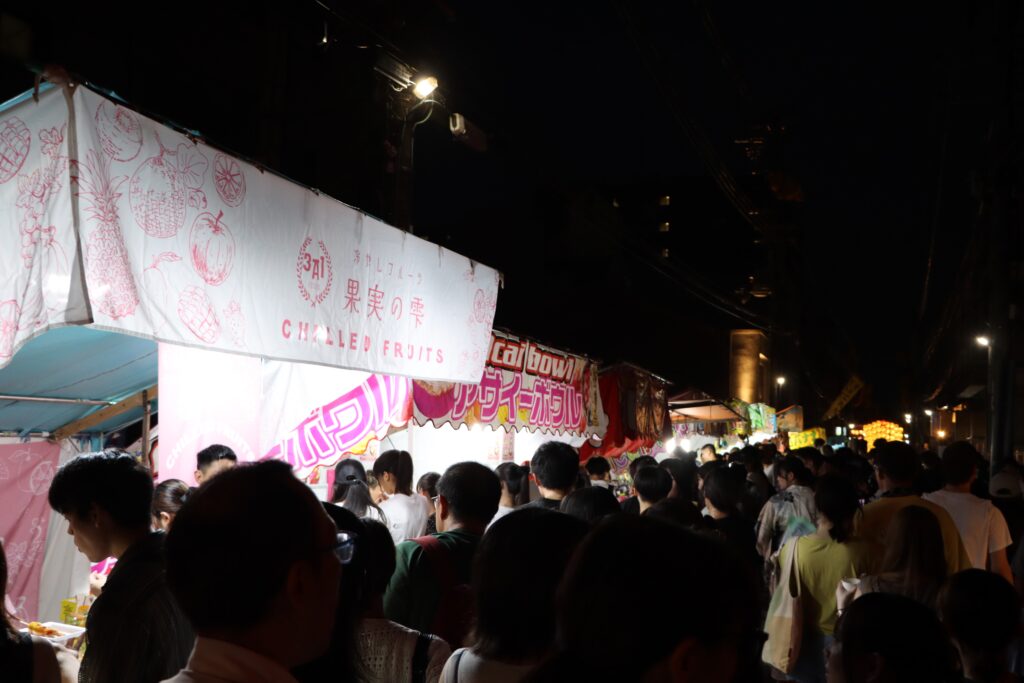
Thousands of food stalls pop up during the nights of July 15th and 16th. If you come to this festival, it’s a must that you grab a beer or some sake and buy some food. Millions of people flock to the food stalls, and some are very popular. Watching the Yamahoko floats is good, but it’s also recommended that you enjoy strolling around the town and find your favorite food and drink.
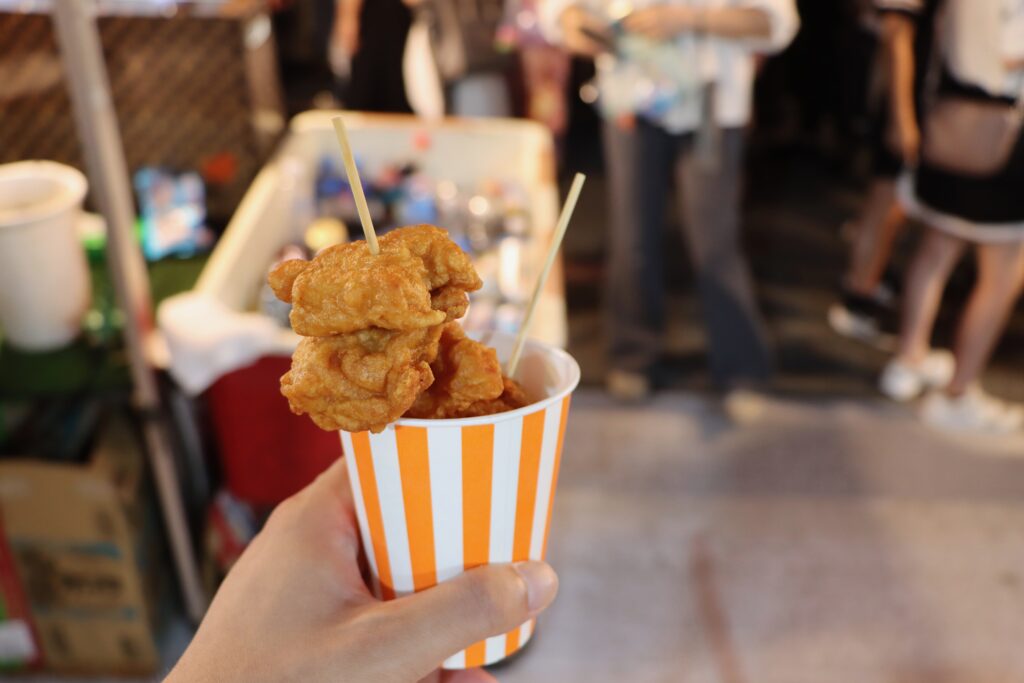
This is “Kara-Age,” deep-fried chicken. I was glad to get it because it’s my favorite. As far as I could see, some food stalls had space in the backs of their tents, so you can sit on a bench and eat food.
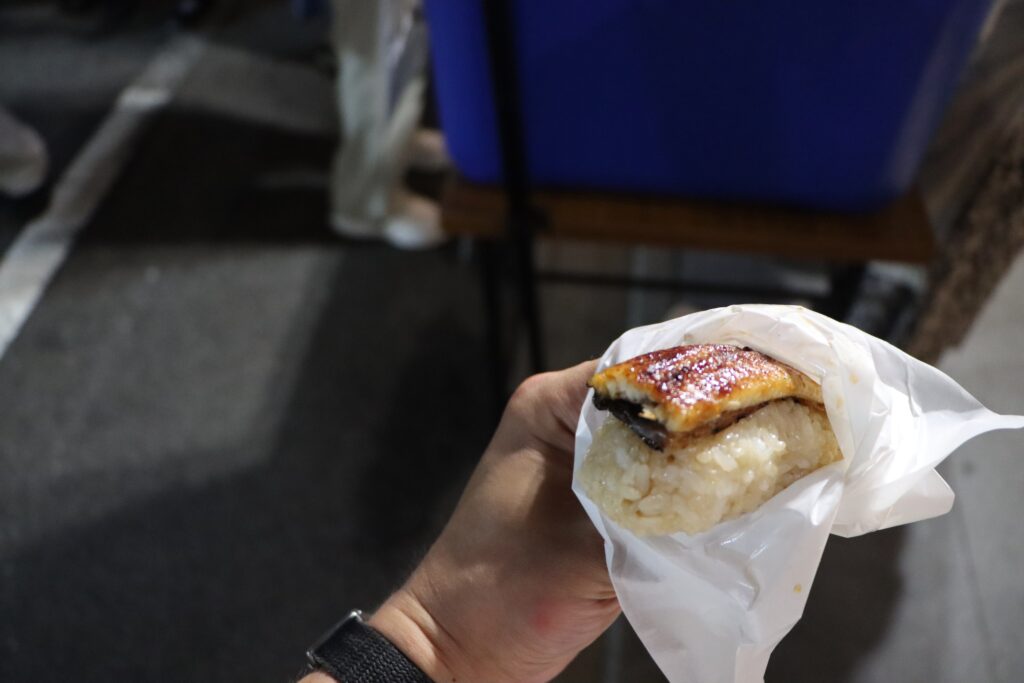
Next, I had a rice ball with broiled eel seasoned with soy sauce and sweetened sake. Eel is an expensive fish, but you can buy it at a food stall cheaply. For those who haven’t had eel, it tastes good because it’s very fatty. The natural fatty taste will expand beautifully in your mouth.
Actually, I hadn’t had a rice ball with eel until then, and I found it yummy. Also, it’s comfortable to have, so you can have it while standing.
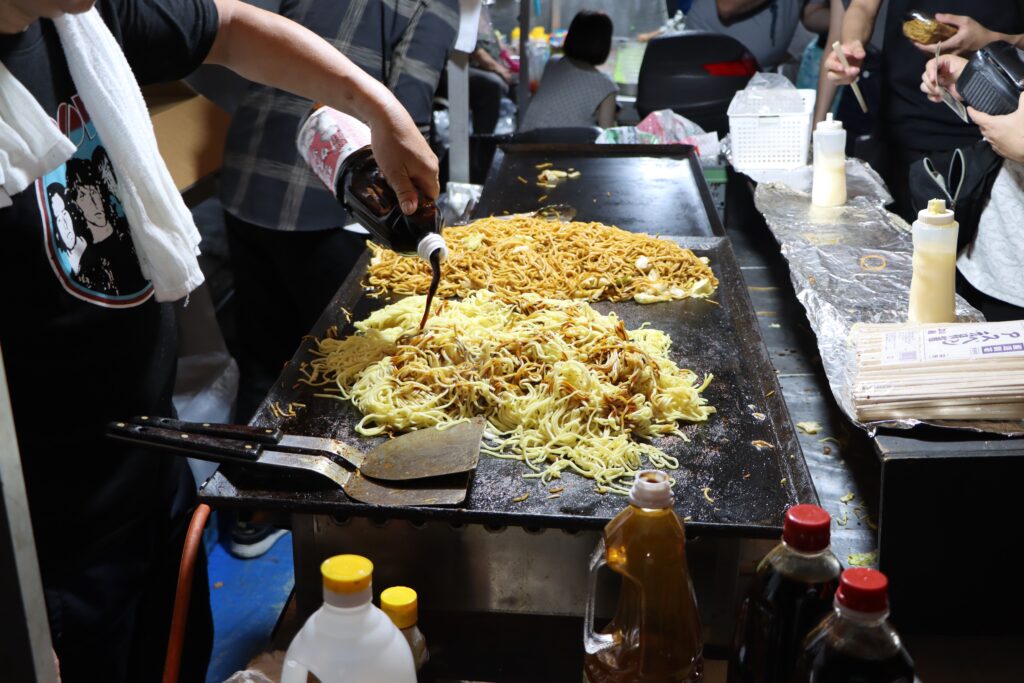
The last food I bought was “Yakisoba,” stir-fried noodles with a savory sauce. We normally have it with mayonnaise on top, but it’s your choice whether you add mayonnaise to it or not.
Yakisoba is indeed the taste of Japanese food stalls. It’s delicious and cheap. Why not try Yakisoba at a food stall and feel the vibe?
Article in same category