 Merry Japan Tours
BLOG
Kyoto Dyeing Workshop — Experience a Timeless Craft at ANDO
Japan boasts its traditional dyeing technique—“Shibori,” in which artisans press the fabric by various methods, such as sewing, pinching with boards, or using strings to create motifs that are left undyed. Japan started its dyeing tradition in the 8th century, and we can see several ancient tie-dyed fabrics at Shosoin Treasure House and Horyu-ji Temple in Nara. The pattern on the fabric is so beautiful that everyone who sees it will be mesmerized.
This time, I visited ANDO, one of the traditional tie-dyeing companies in Kyoto, to have a Shibori experience. This company started off as a dyeing company, and now it has developed into one of the leading companies that produce tie-dye products, such as “Shibori bags”, “Tye-dyed Happi coats”, or “Tye-dyed T-shirts.”
By reading this article, you will get the whole picture of what the inside of the shop is like and what you can expect through the workshop.
Contents
ANDO Steals Your Heart at a Glance.
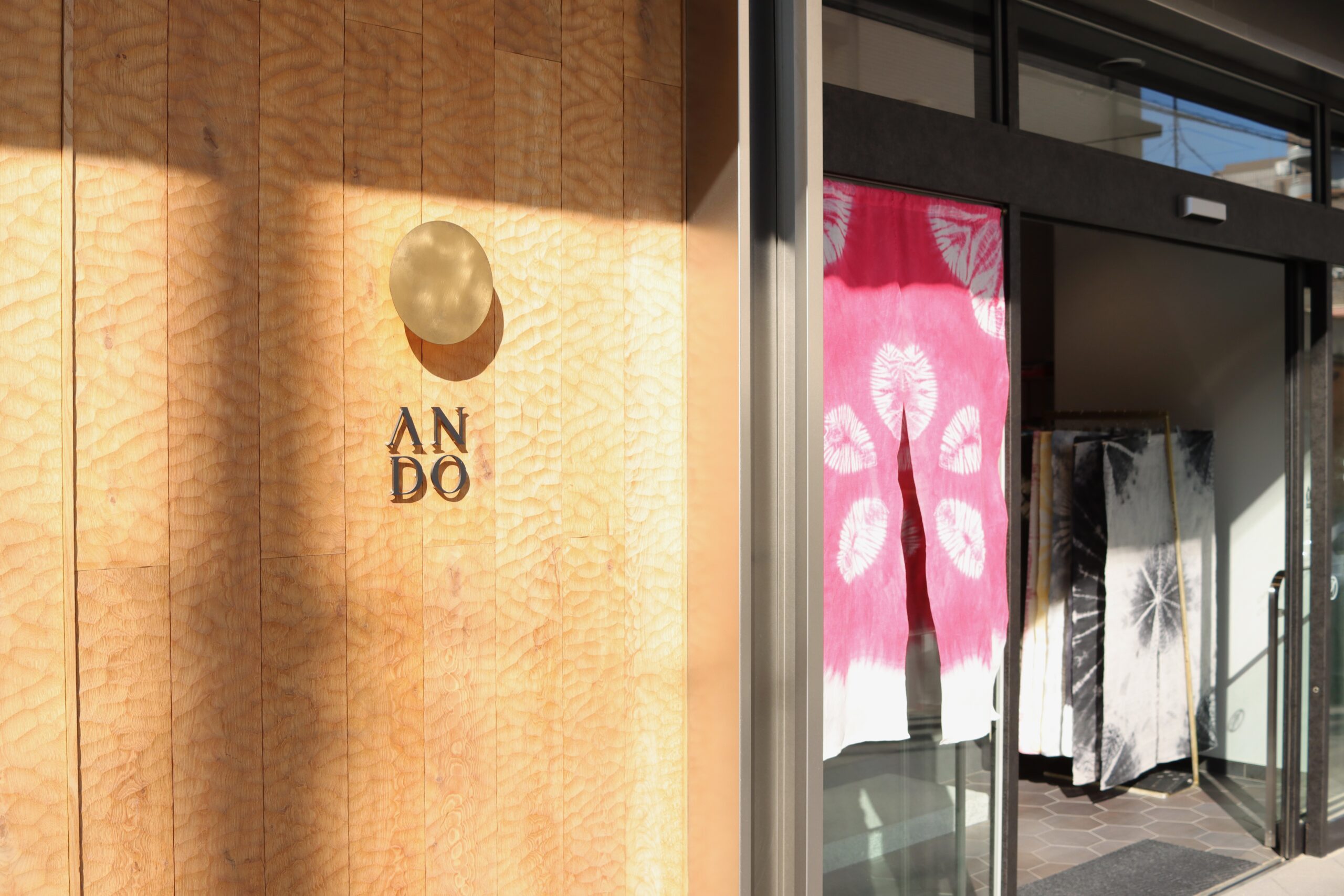
Nestled near a beautiful park, ANDO surely has a fascinating entrance—you will be captivated by the entrance that welcomes visitors who are anticipating the world of dyeing. An 8-minute walk from Kiyomizu Gojo Station will take you to one of the most renowned dyeing companies—ANDO.
It feels like the entrance is beckoning every guest to lead them through beautifully dyed clothes and items.
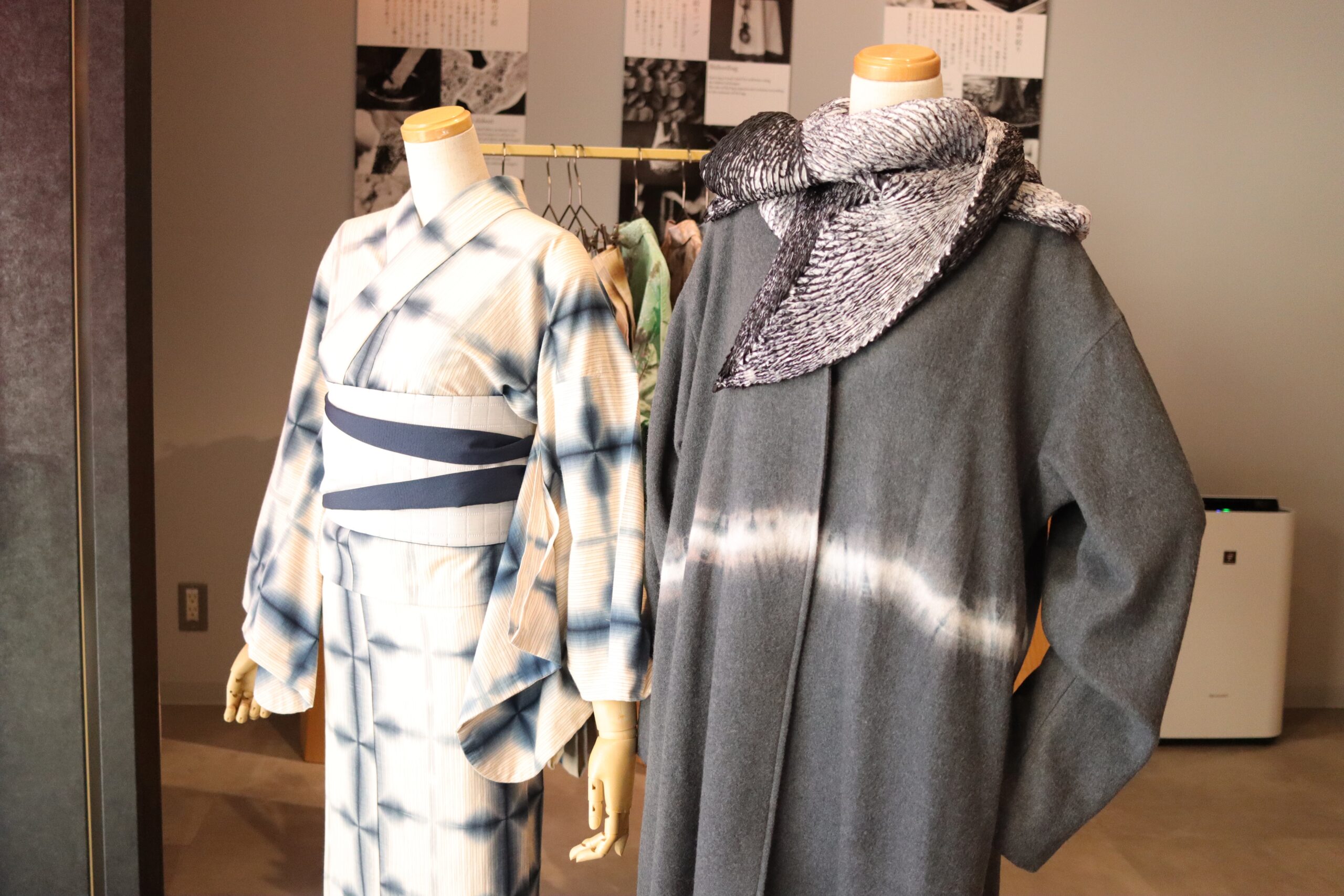
Upon entering the shop, my eyes directly went to a fashionable coat and Yukata, which is a casual summer kimono. The coat is so traditional and innovative that I bet it may be to Westerners’ taste.
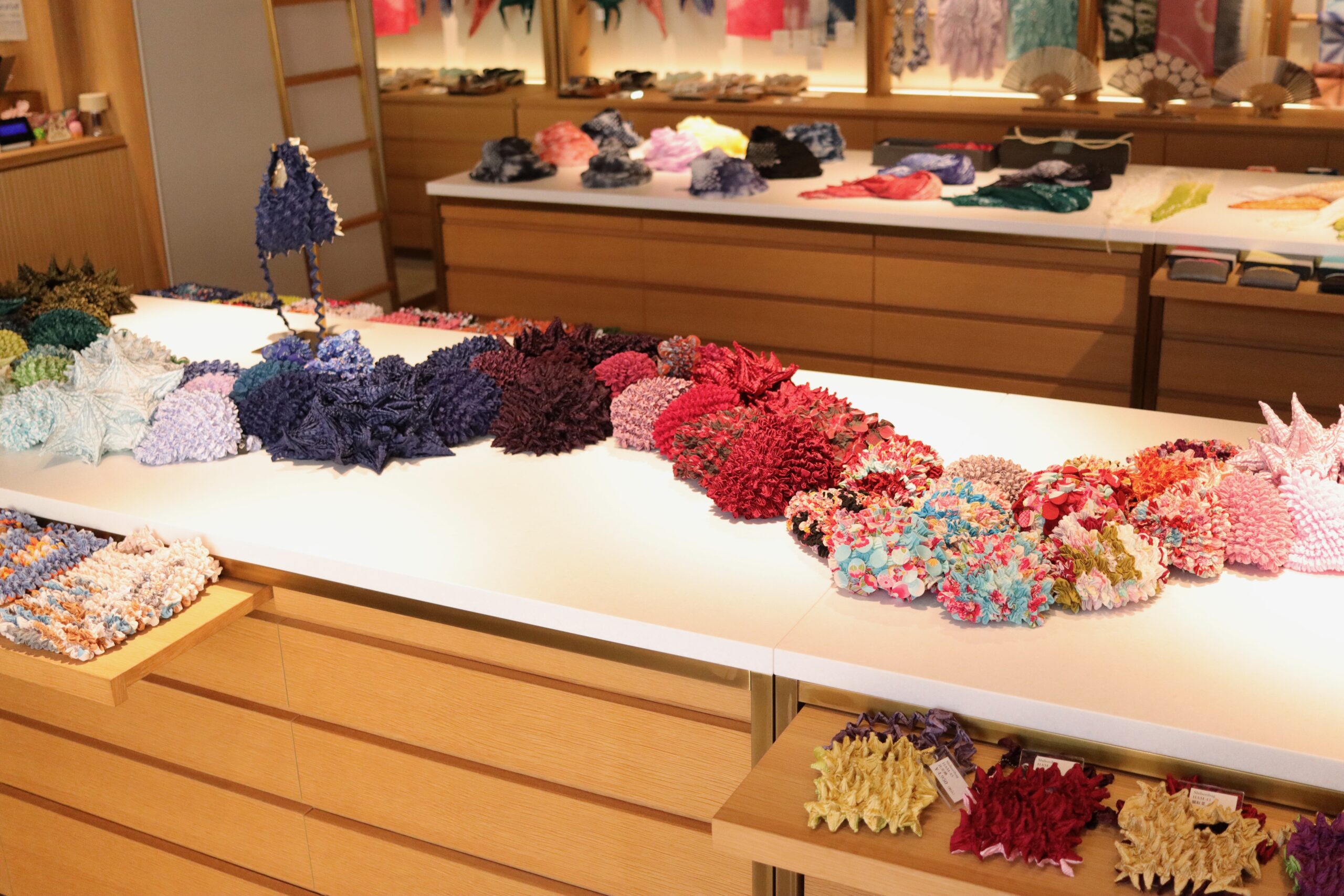
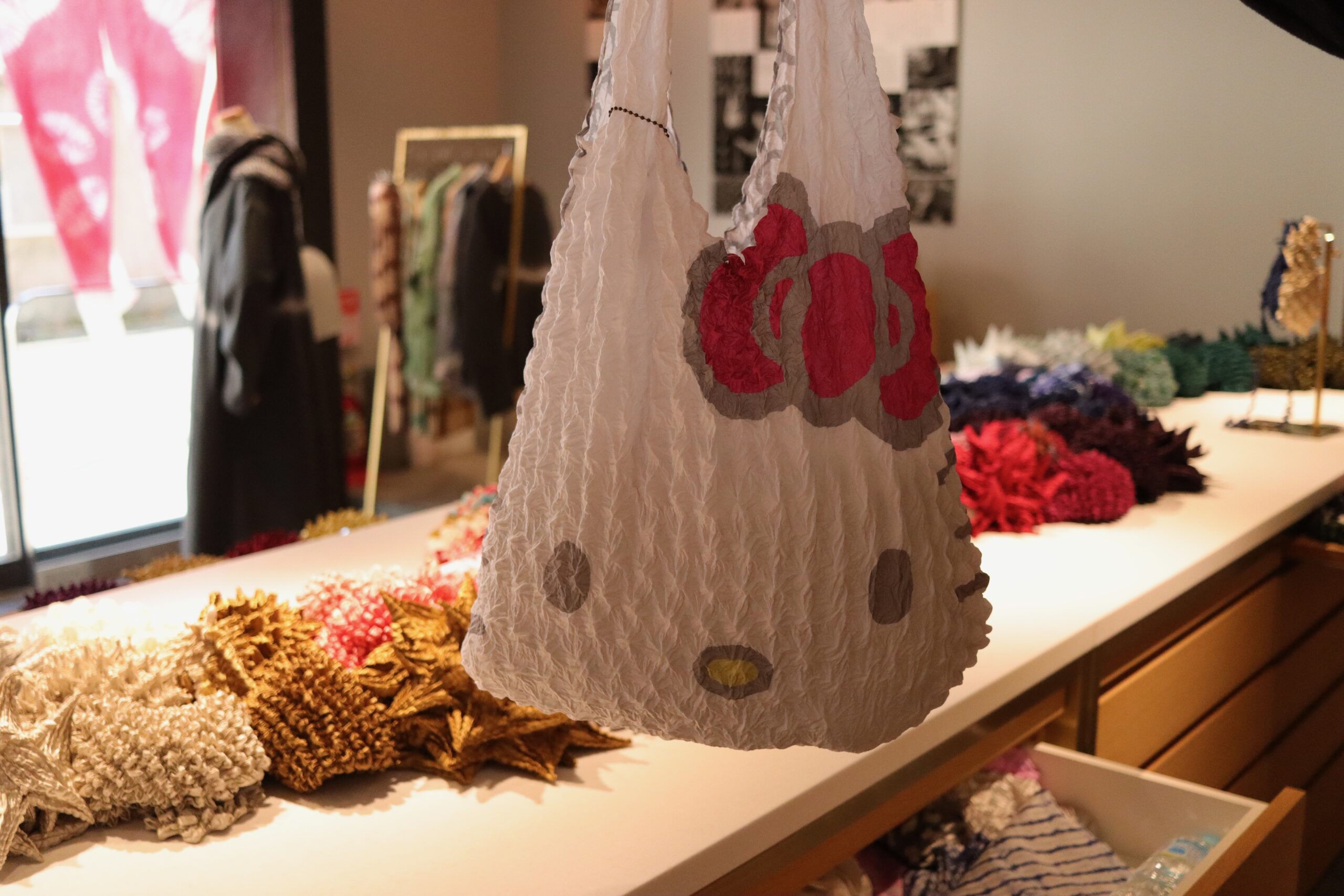
Other items that I was captivated by were the “SHIBORI BAGS.” At first glance, you may wonder what the colorful flower-like objects are. Indeed, these colorful bags can also be utilized as interior decorations, as these bags can be stretched and shrunk!
A kind shop clerk demonstrated how durable and flexible the bag is. This bag can hold much larger items than you might think.
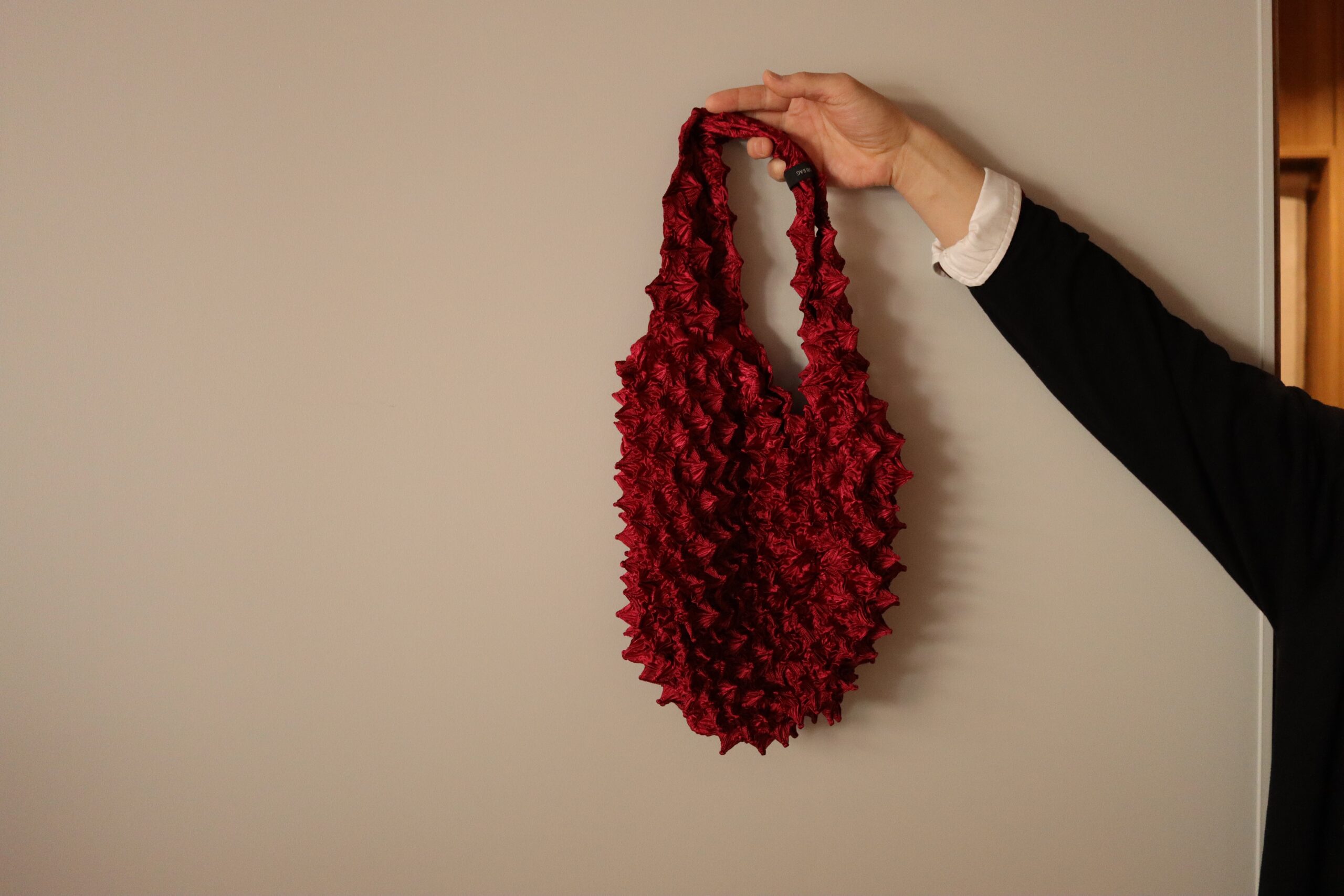
Look at the picture below. The SHIBORI BAG is stretched when you put something in it. The bag turned out to be durable, through it looked fragile.
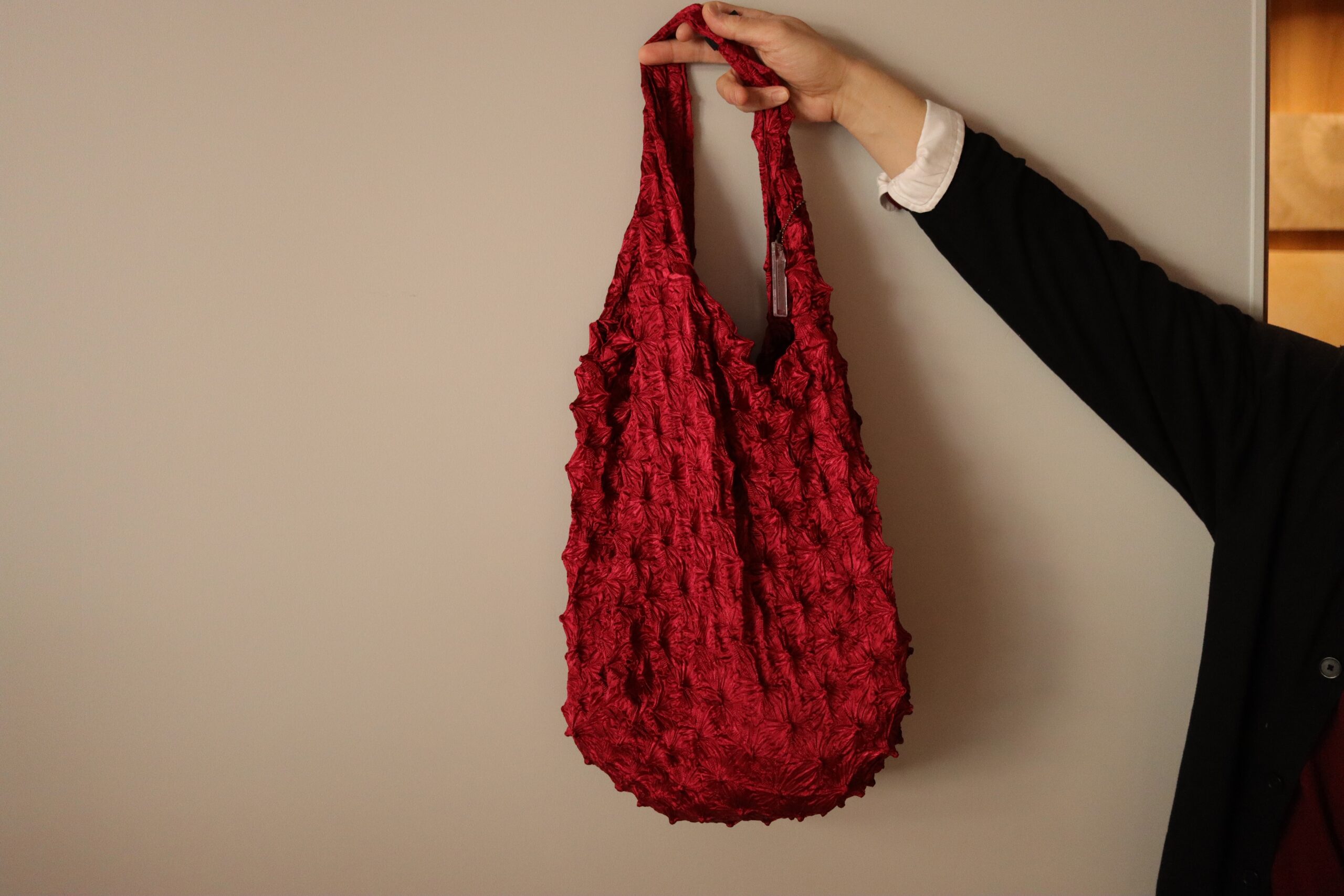
For those who are in love with “Hello Kitty,” SHIBORI BAGs come in a Hello Kitty version. You may well be tempted to purchase this bag on the spot. In my case, I bought it on impulse.
Let’s Make Your Own Tie-dyed T-shirt
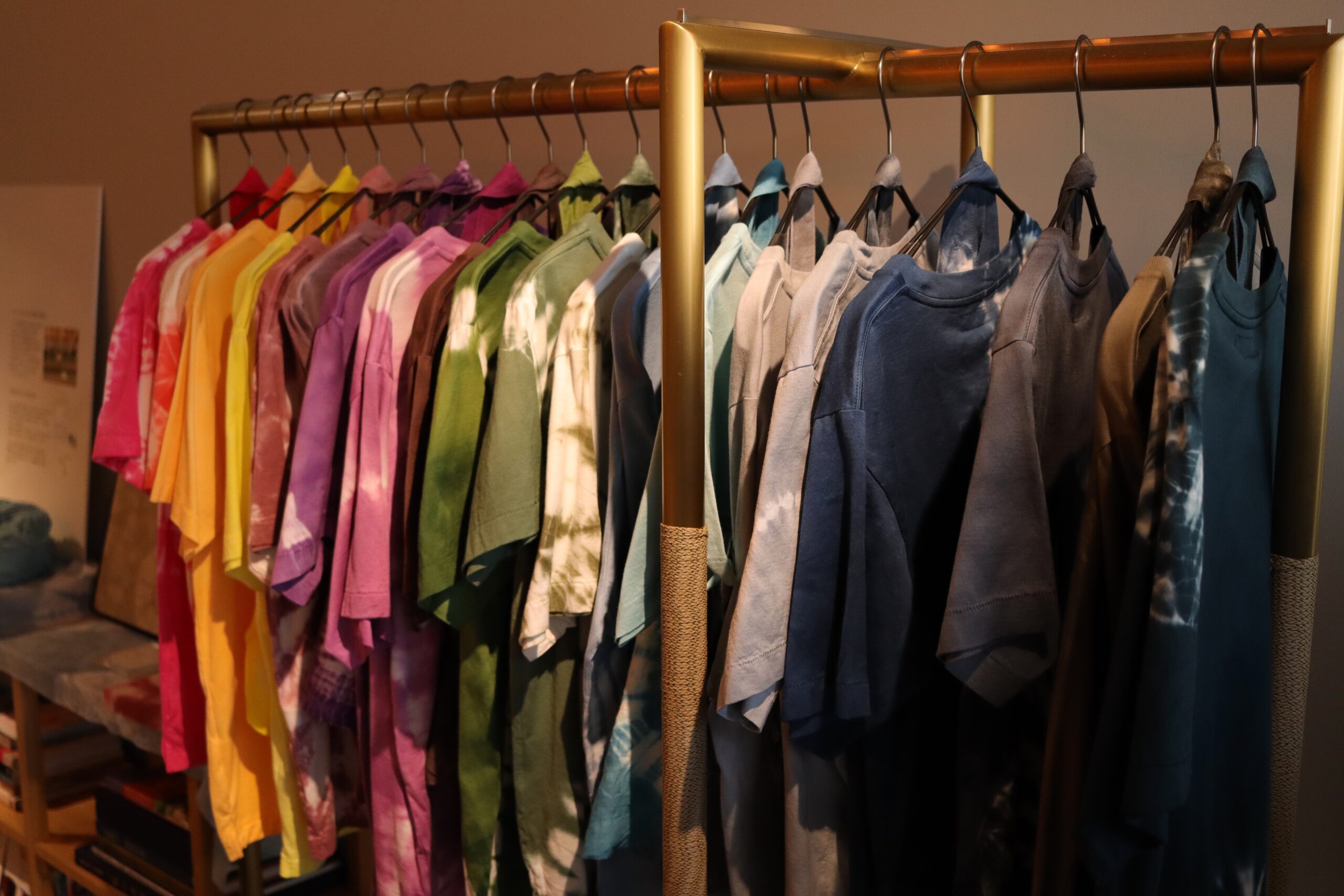
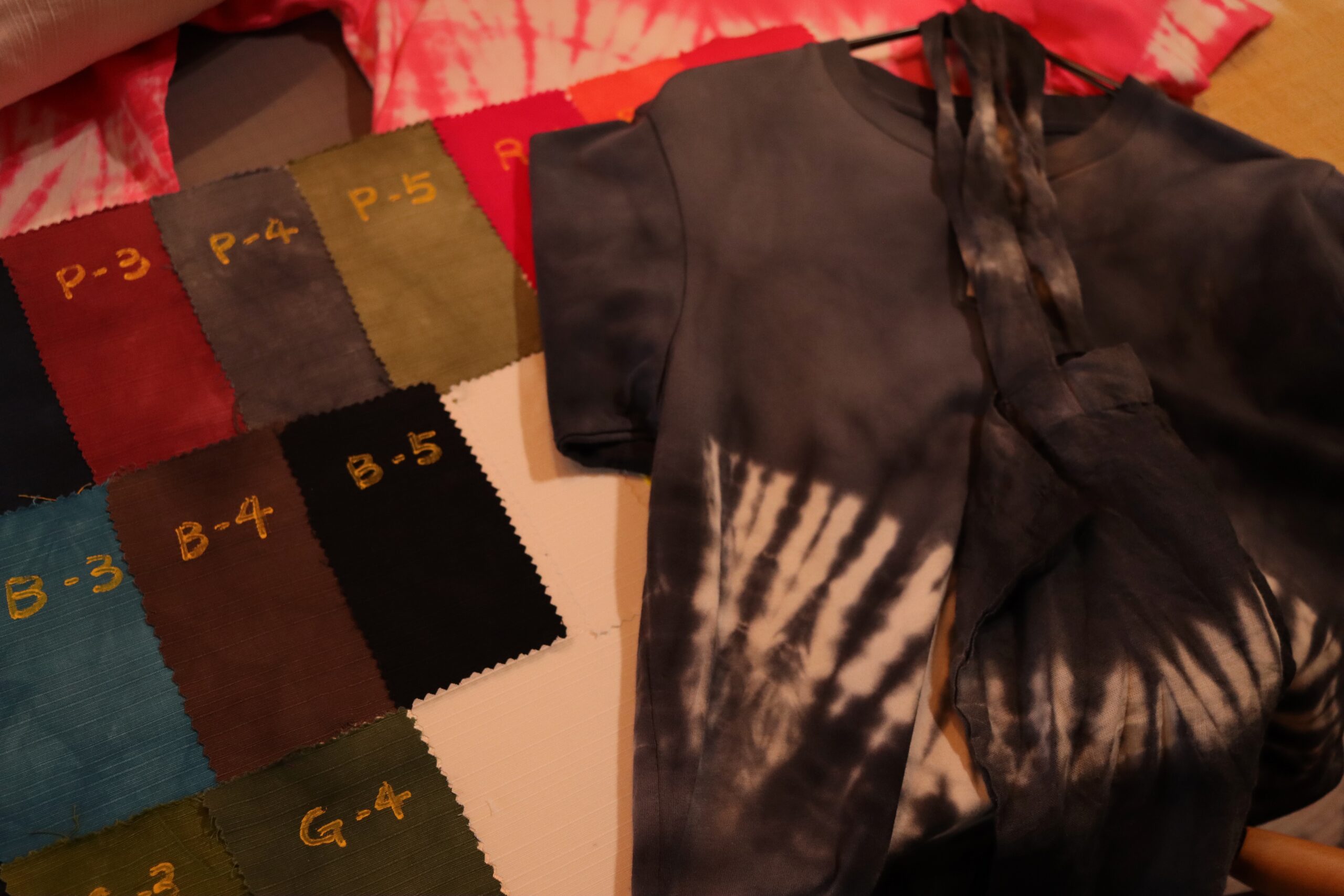
First, there was a variety of sample tie-dyed T-shirts, all of which were so fashionable that I took some time choosing the color of T-shirt I wanted. Here, you need to choose the color and the tie-dyed pattern. The time needed to make your own tie-dyed T-shirt may be about an hour and a half.
The workshop fee is 5,500 yen per person. In addition to making a tie-dyed T-shirt, there are other experiences including making a tie-dyed apron, a tie-dyed wrapping cloth, or a tie-dyed tote bag.
This time, I decided on the color black. I also liked the pattern on the black T-shirt, so I looked no further. If you don’t like the pattern on the T-shirt, you can choose from another variation of T-shirt, on which your favorite pattern can be tie-dyed.
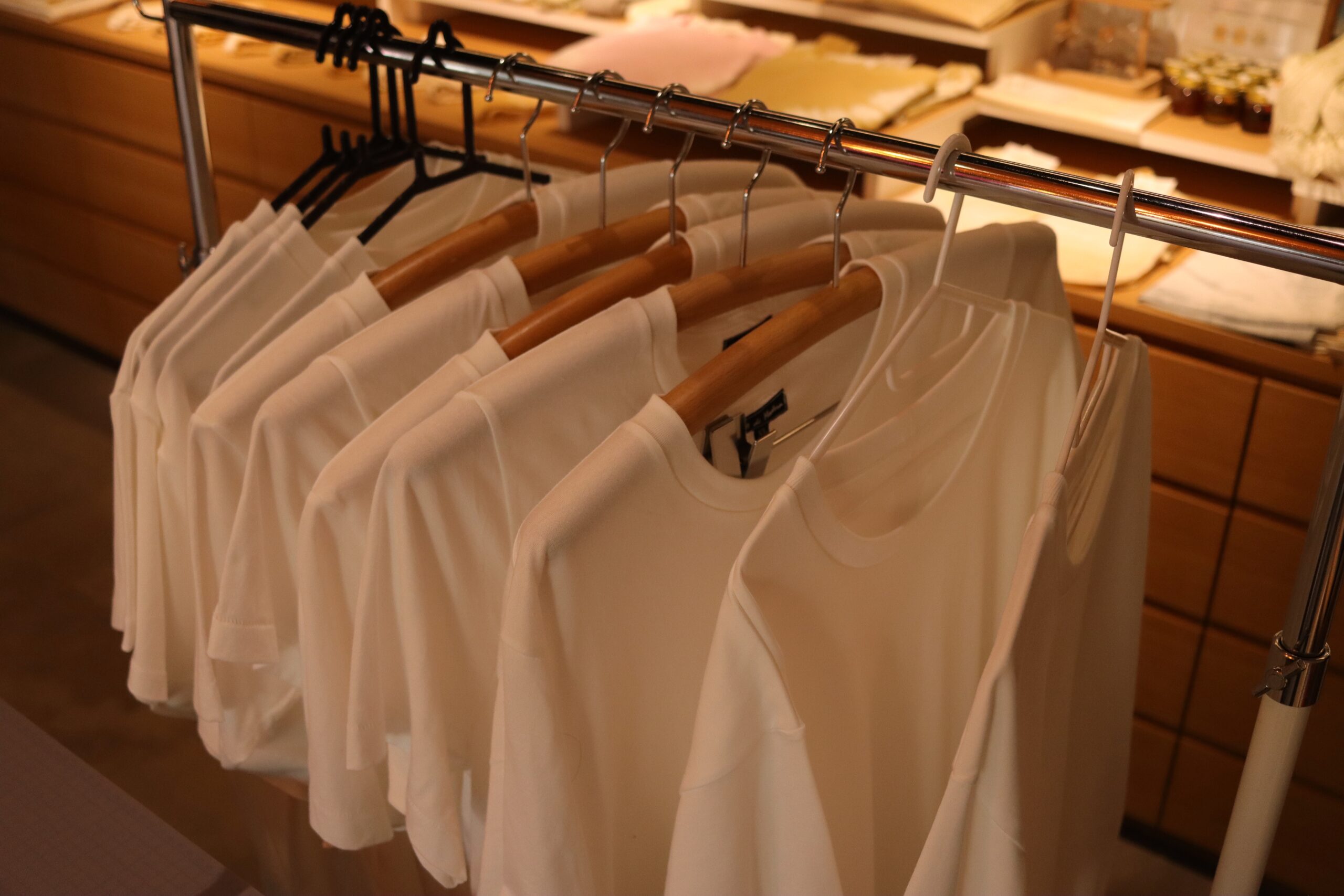
Next, I decided on the size of the T-shirt from several options. For those who might worry about their body size, the T-shirt comes in various sizes, such as XL for tall men and women and very small sizes for children.
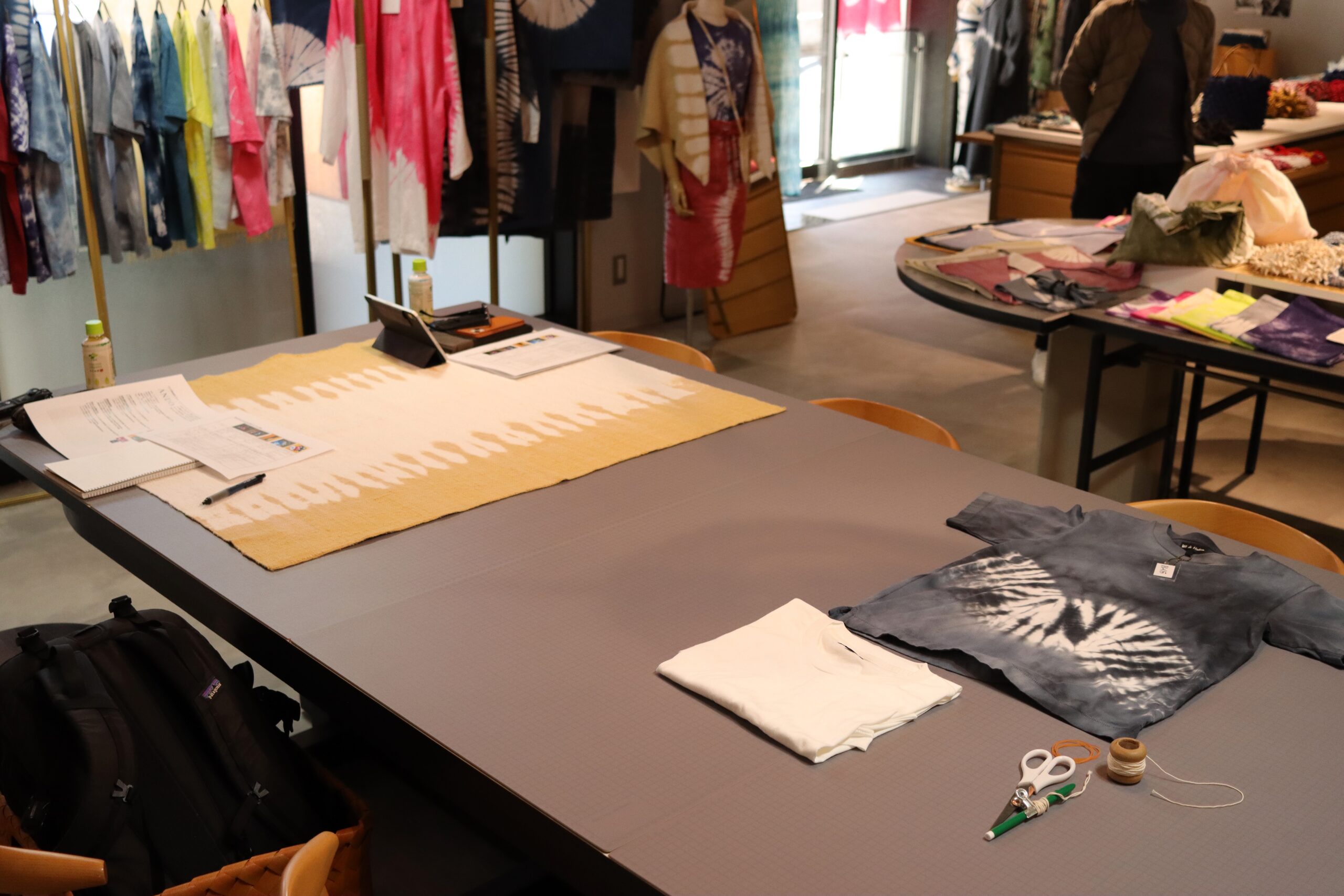
Then, I decided on the size L. The picture below shows a huge table for the workshop. There’s something cozy and relaxed about the atmosphere. The workshop table is surrounded by colorful tie-dyed clothes, so you may feel as if you were in a world of fantasy!
Let’s Get Started!
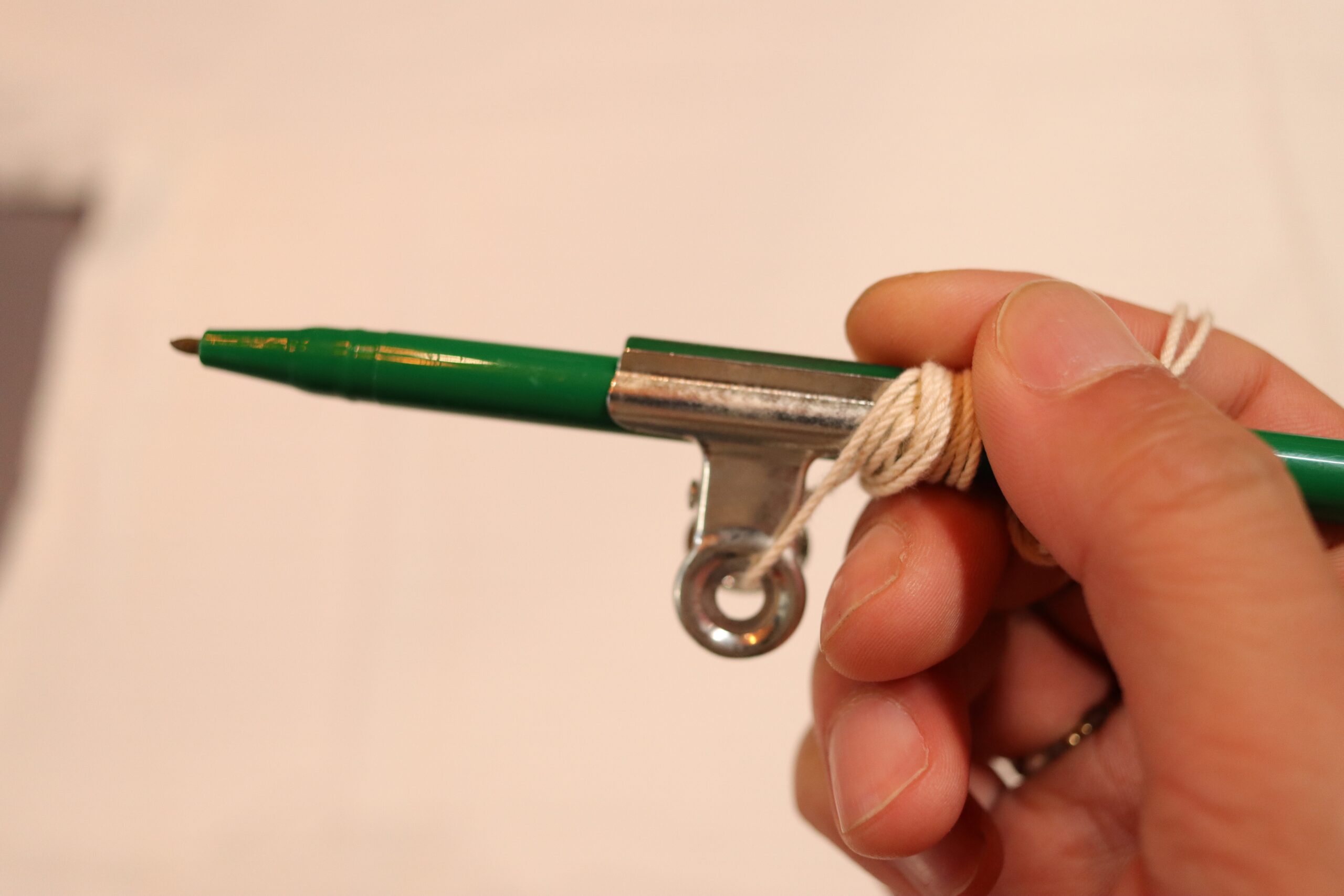
I took a marker pen to draw lines of the pattern I chose. This process is very important, since you decide the outline of the tie-dyed design. You should take some time drawing the lines because there’s no time limit. Also, you don’t need to stick to the model pattern; you can let your creativity run wild and draw innovative lines on your T-shirt—that’s the spirit!
This time, I settled for the original pattern with a little tweak added, so as not to end up with a failure. If you are the type of person, who is bold enough not to fear any mistakes, please do it your own way.
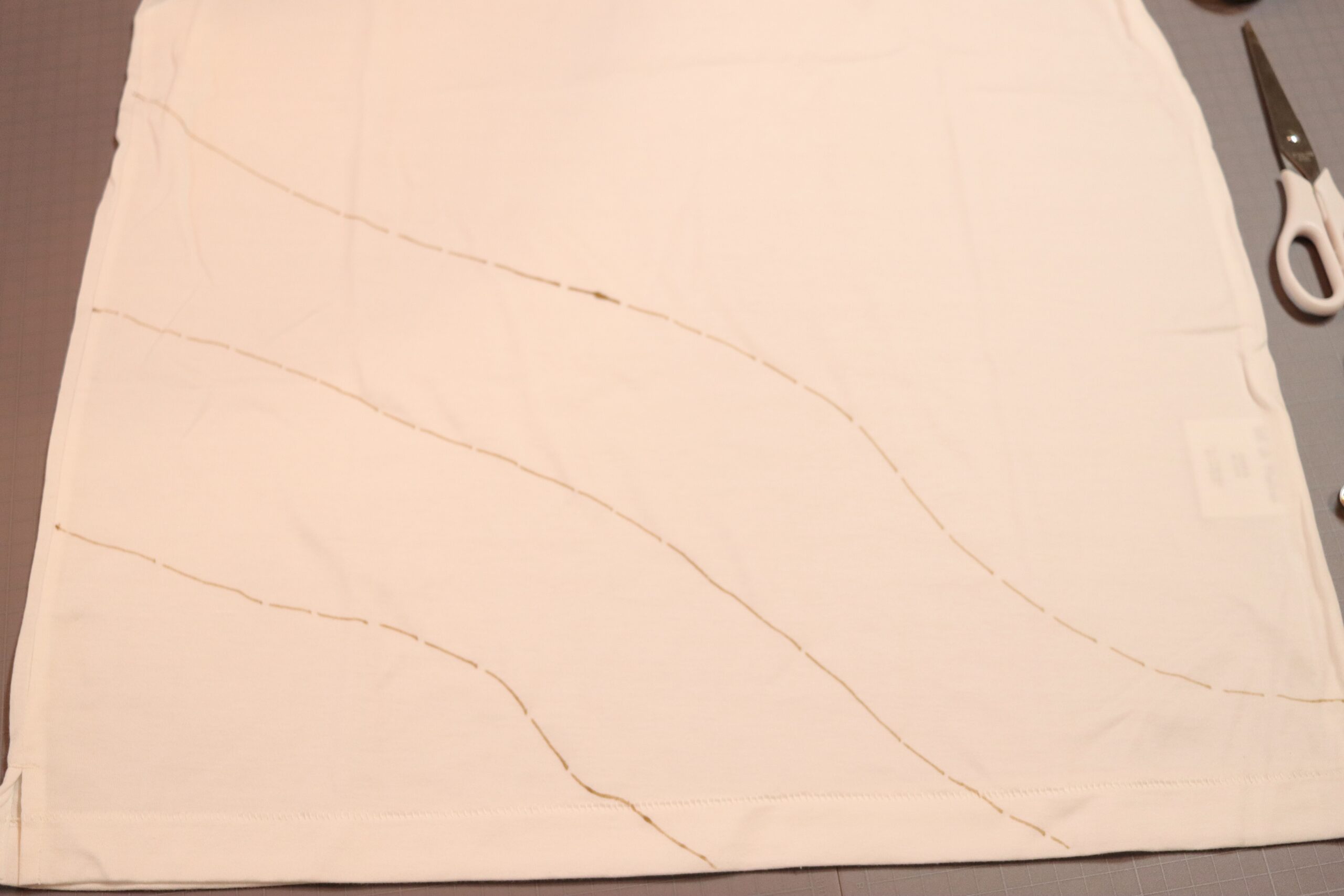
Next, I pinched my T-shirt little by little so that I intentionally created the parts to be left un-dyed. Please conjure up a small accordion, when you do this process. I learned that the knack for making a beautiful pattern was to pinch it evenly. Let me tell you, this process is the crux of this workshop—a small wrinkle will go a long way toward creating the pattern you want.
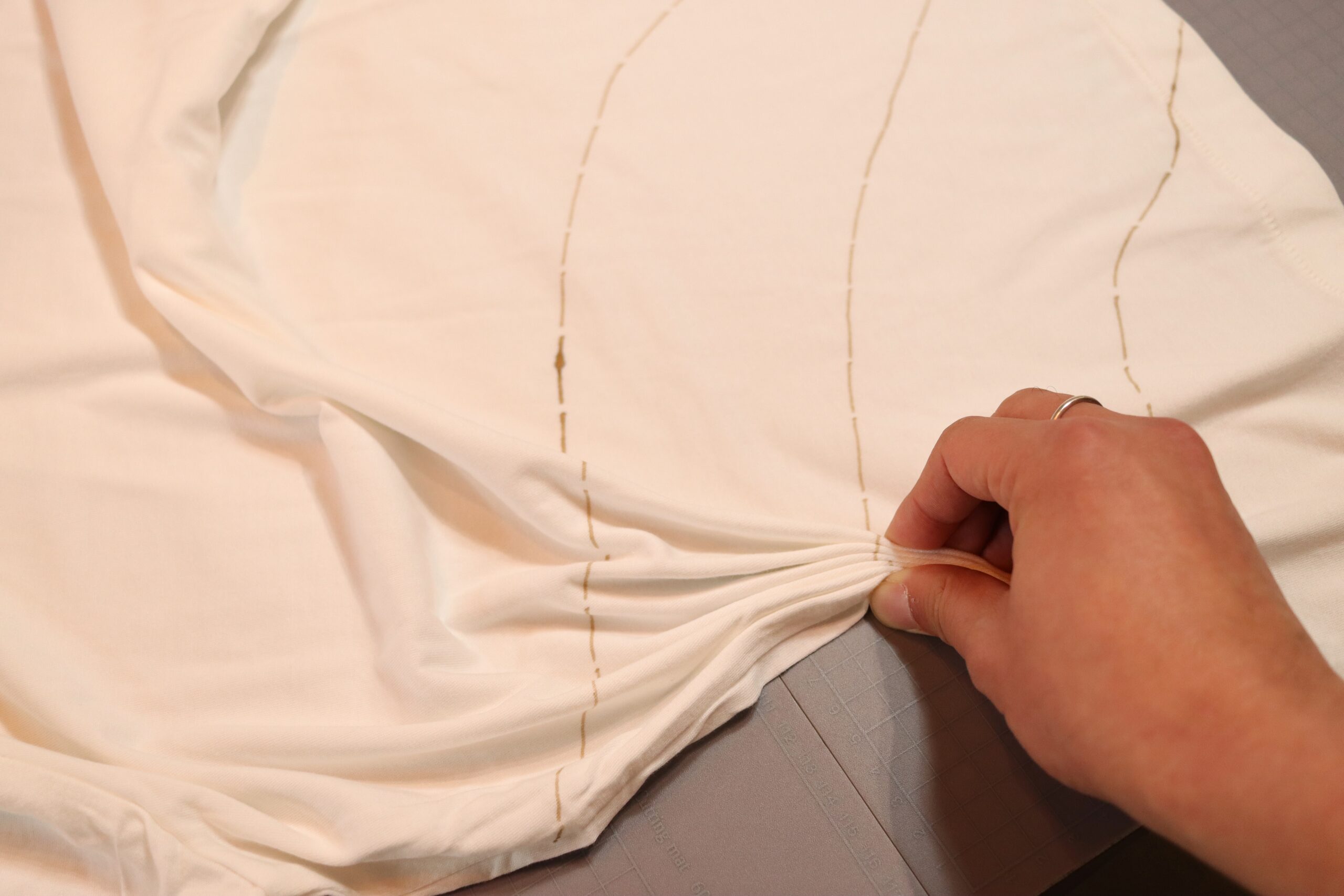
Then, I fixed the bundled parts of my T-shirt with rubber bands, and I felt relieved.
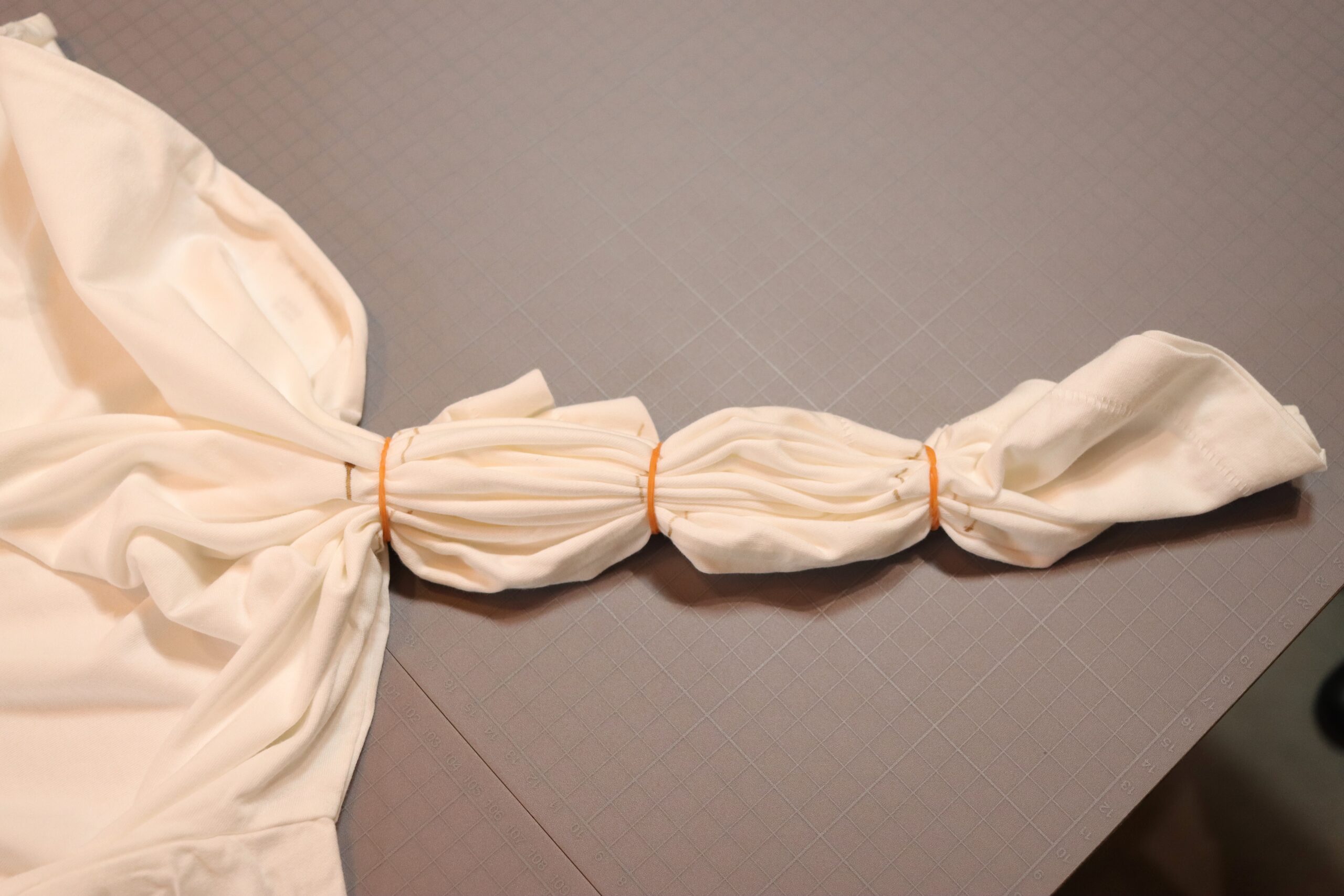
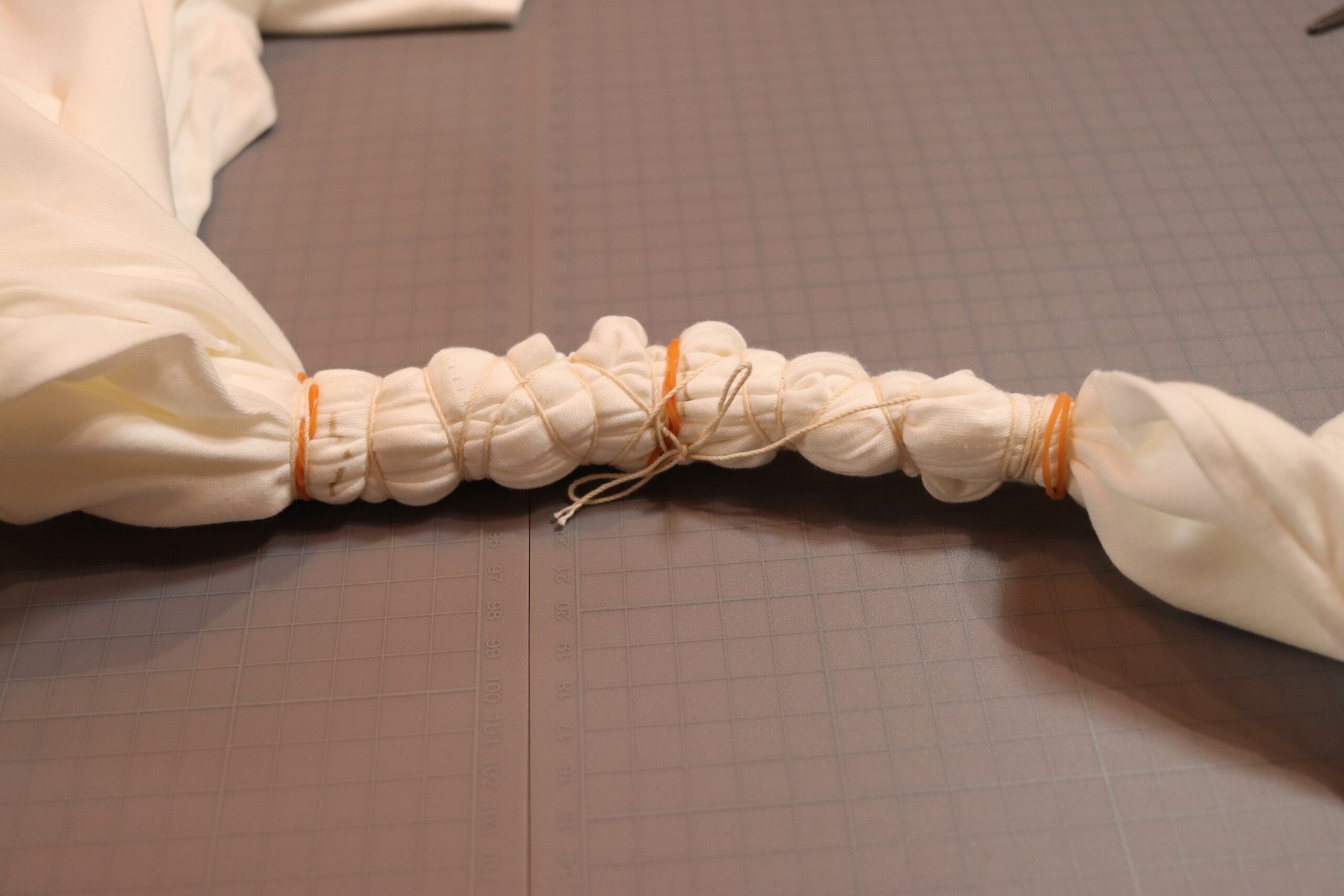
Next, I wound a string around the bandled parts to make the pattern. Please imagine your finished artwork, while you do it. That being said, the pattern varies depending on the tightness, the spacing of the string, and the extent of dyeing, so don’t be too nervous—just relax!
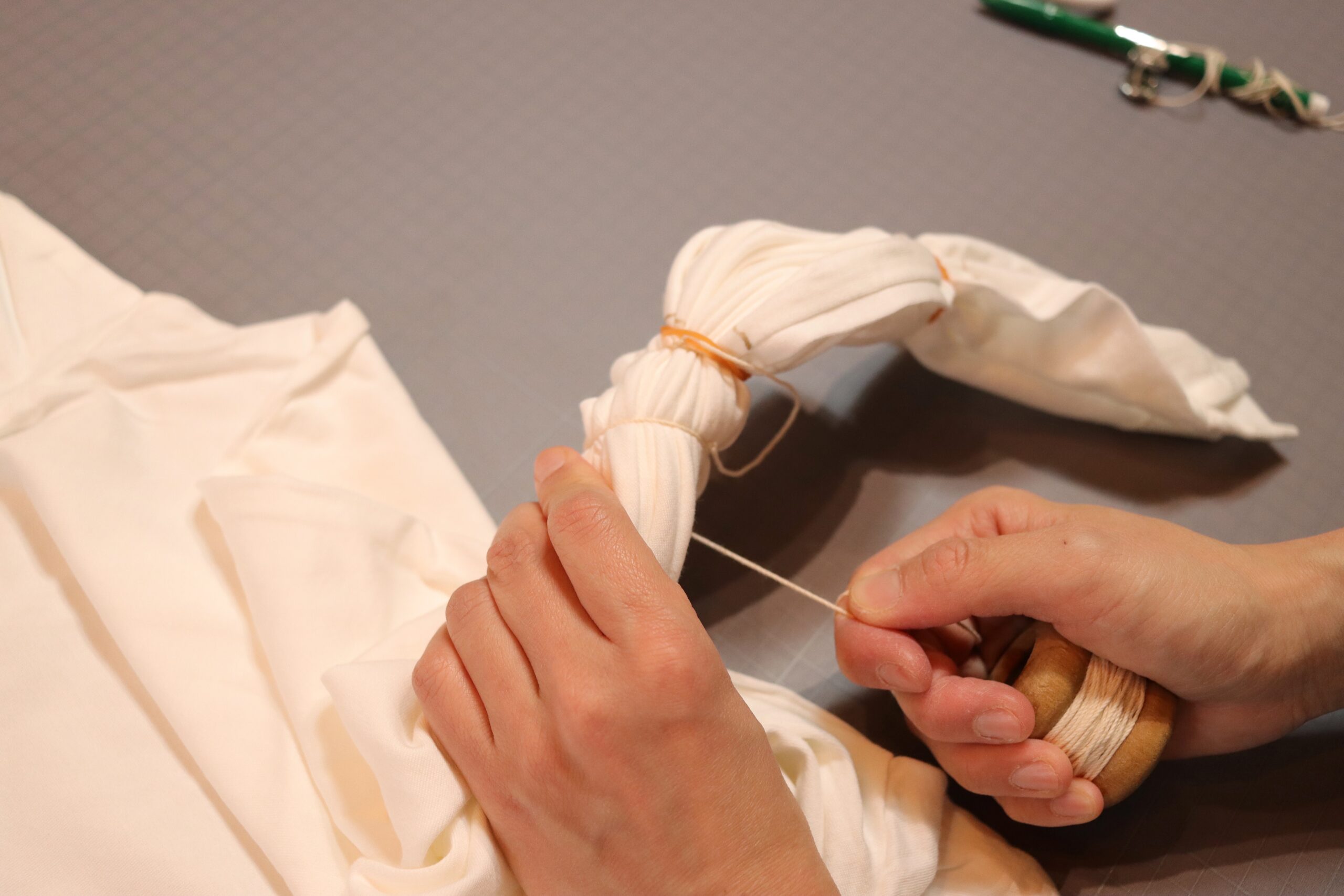
Then, I finished tying it with the string. It looks like a tied ham, don’t you think?
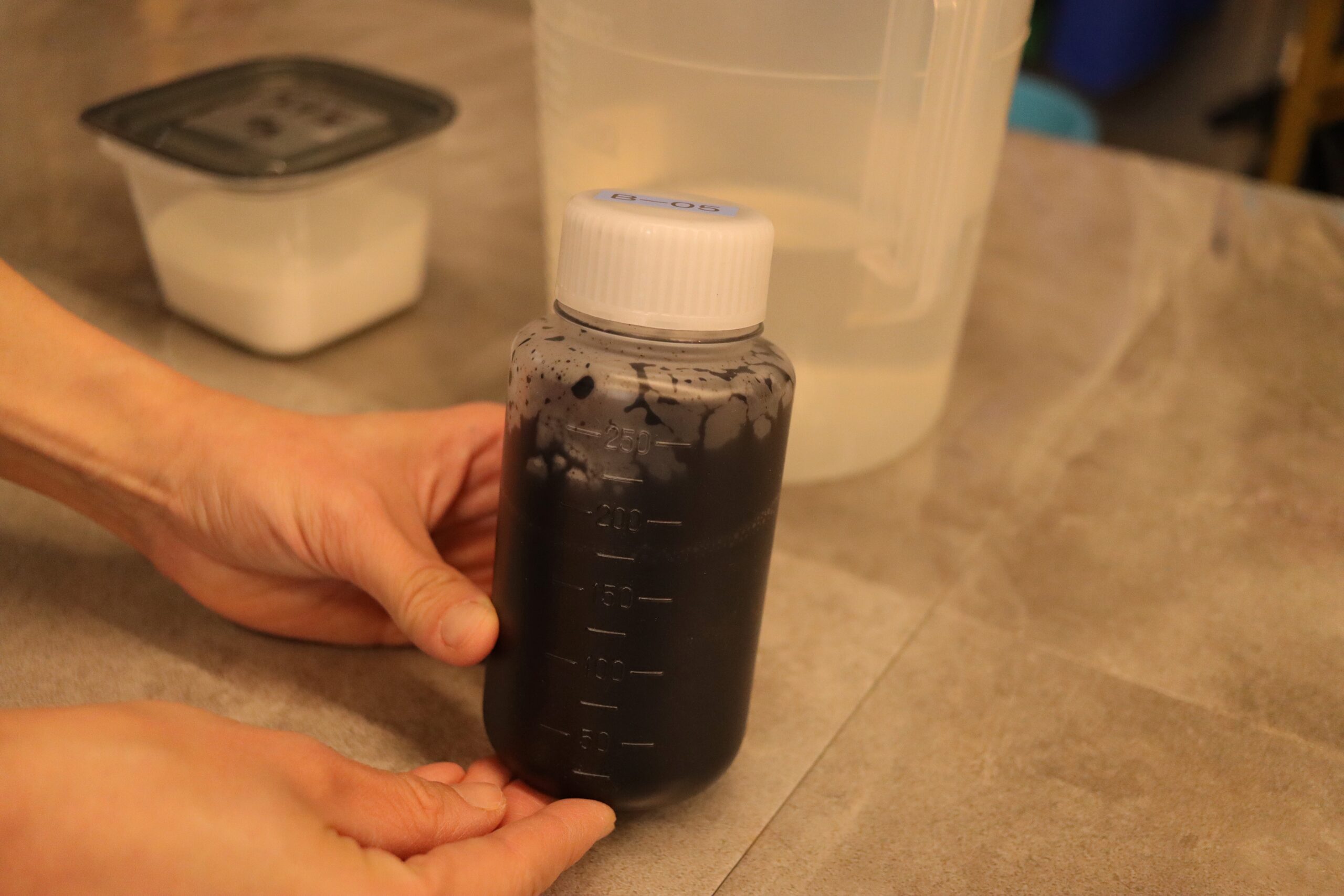
Then, I moved on to the next step. The picture below is a bottle filled with black dye.
Dyeing requires specialized knowledge, so a kind artisan with traditional craft credentials helped dye the T-shirt.
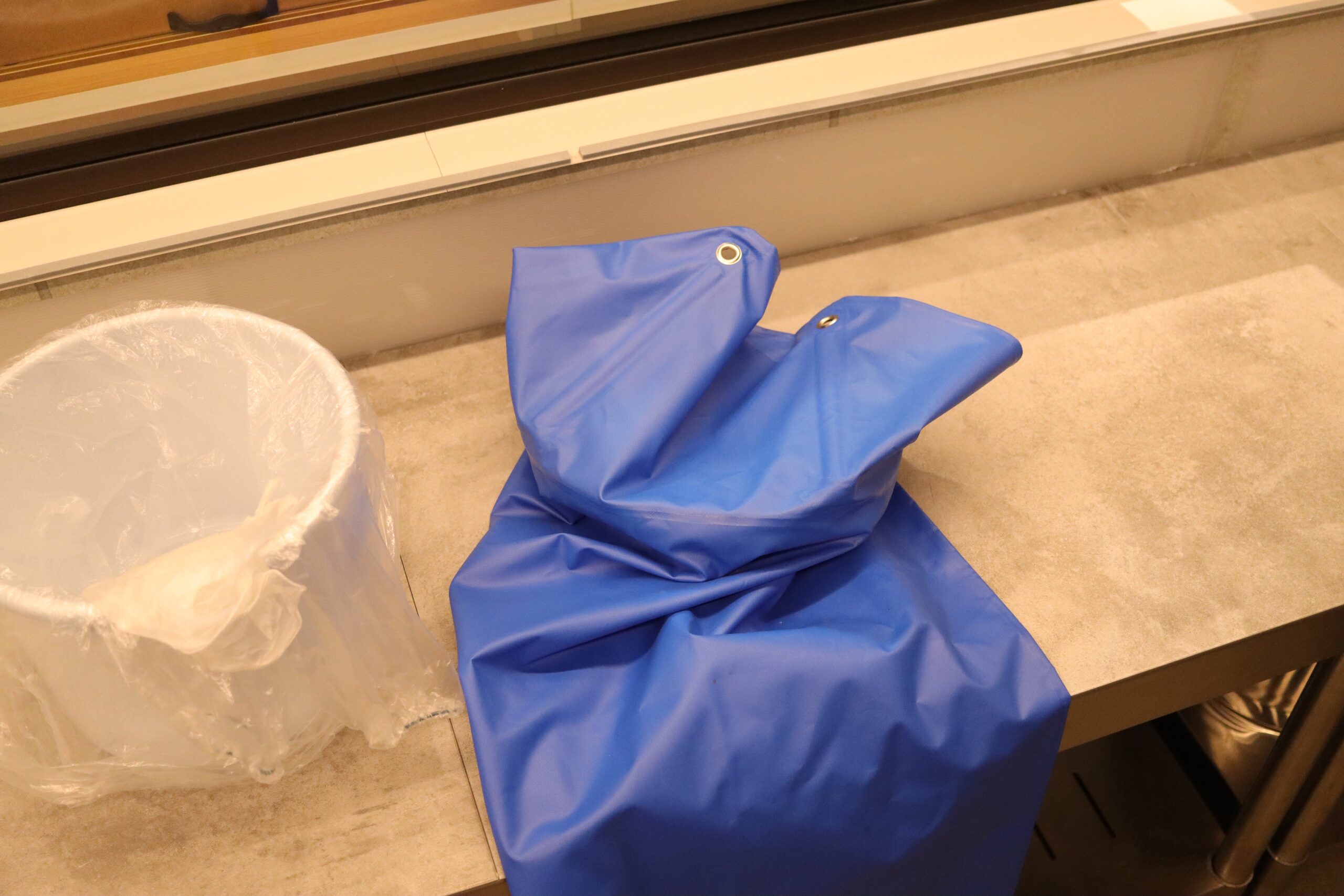
First of all, I needed to wear protective clothing just in case. It may be interesting to have the artisan take a picture of you wearing the special outfit.
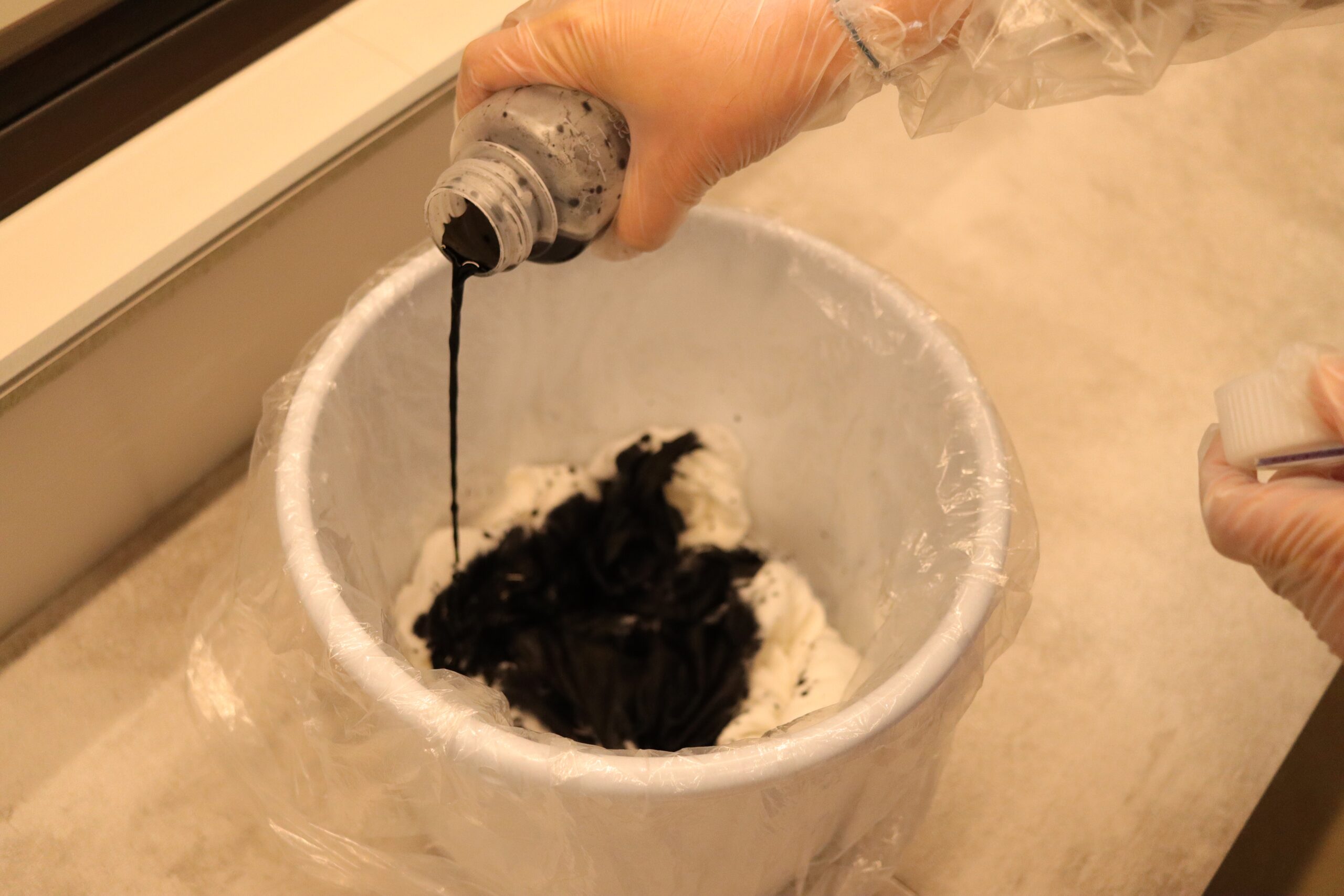
I dripped the dye gradually onto the T-shirt, so that it would soak in evenly.
If you are inattentive and leave some parts undyed, those parts won’t be dyed beautifully.
I finished dyeing the T-shirt. Once you feel it’s done, I recommend asking the artisan if it’s ok. All I needed to do was dye it black evenly, but it was more difficult than it sounds.
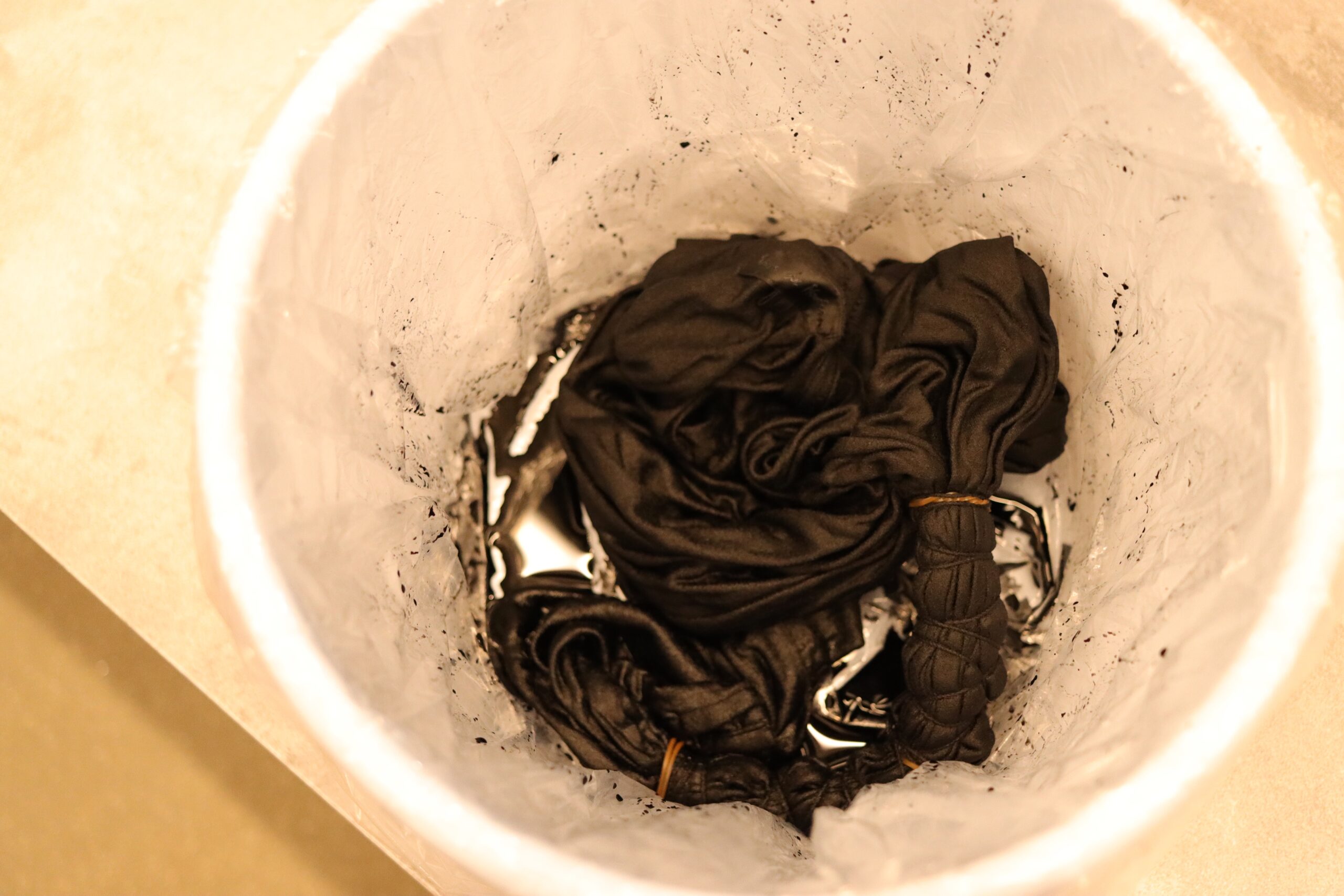
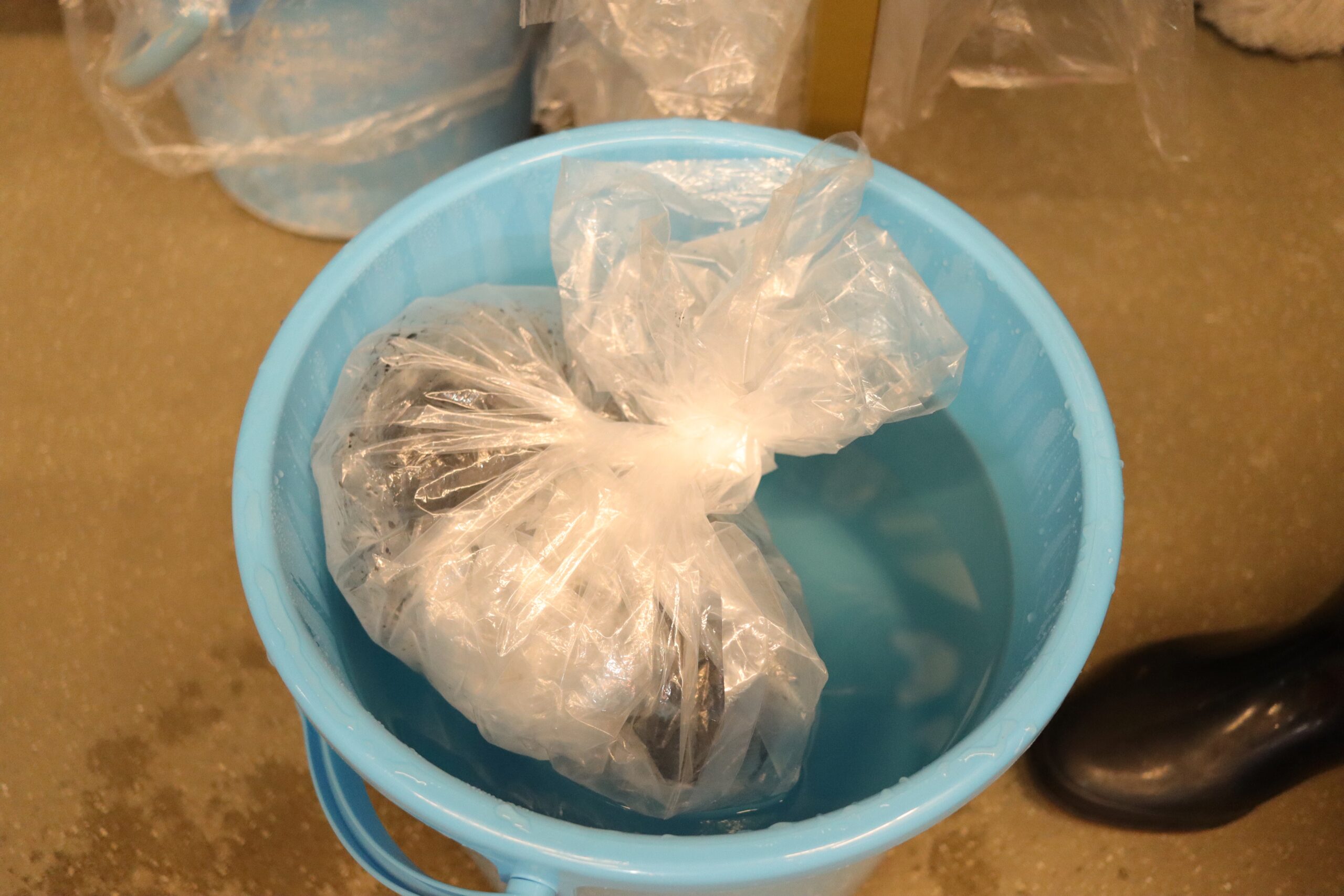
Then, I put it in a plastic bag and then into a bucket, so that the dye could soak deeply into the T-shirt. It took some time for the dye to set, so that it wouldn’t come off.
Enjoy Browsing the Shop and Chatting with the Shop Clerks.
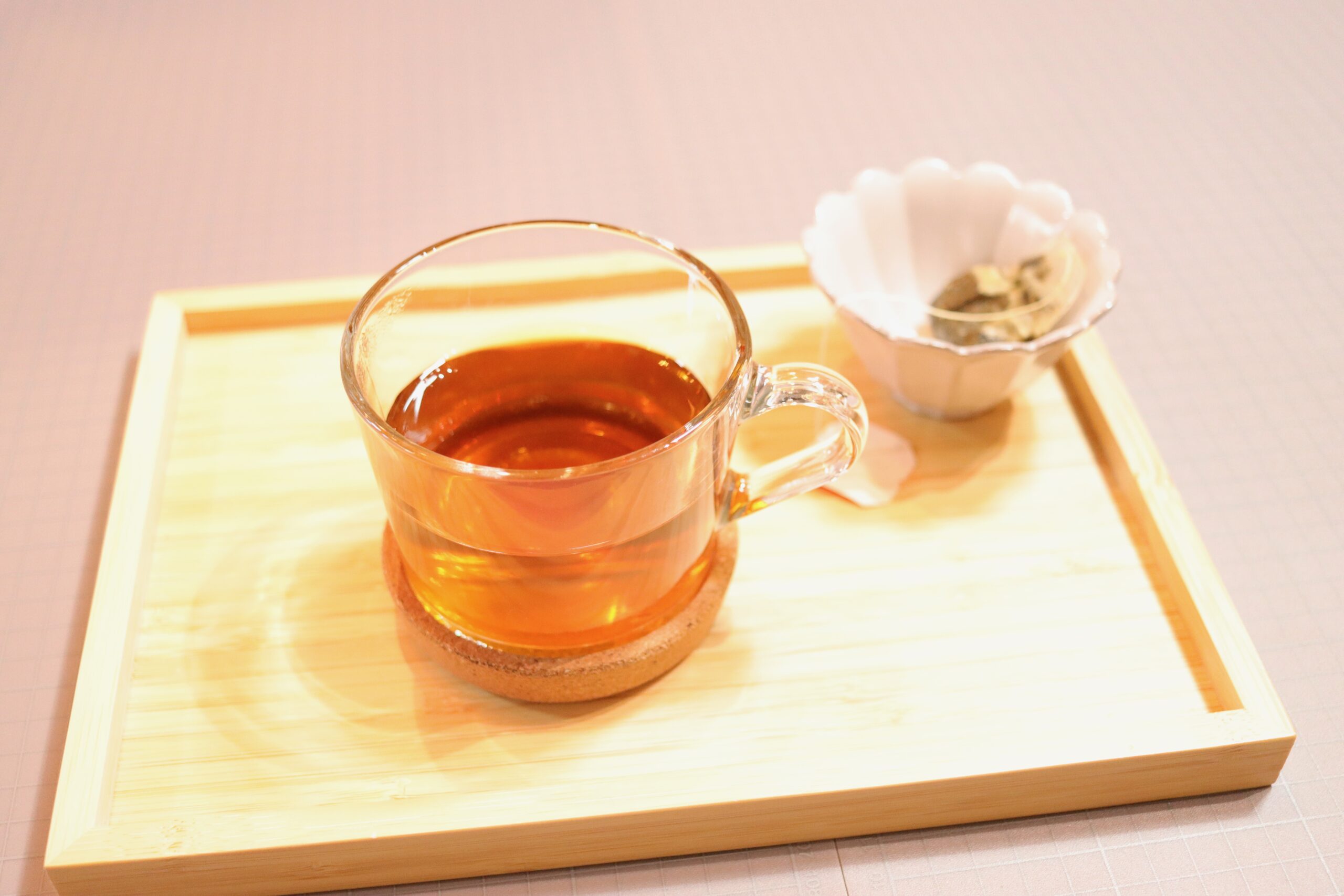
While I waited for the dyeing to be completed, I enjoyed browsing the shop and chatting with the staff over a cup of tea. I was looking forward to the finished piece. You can choose from coffee, café au lait, black tea, or green tea. The staff are very kind and speak English naturally, so you can have a good conversation!
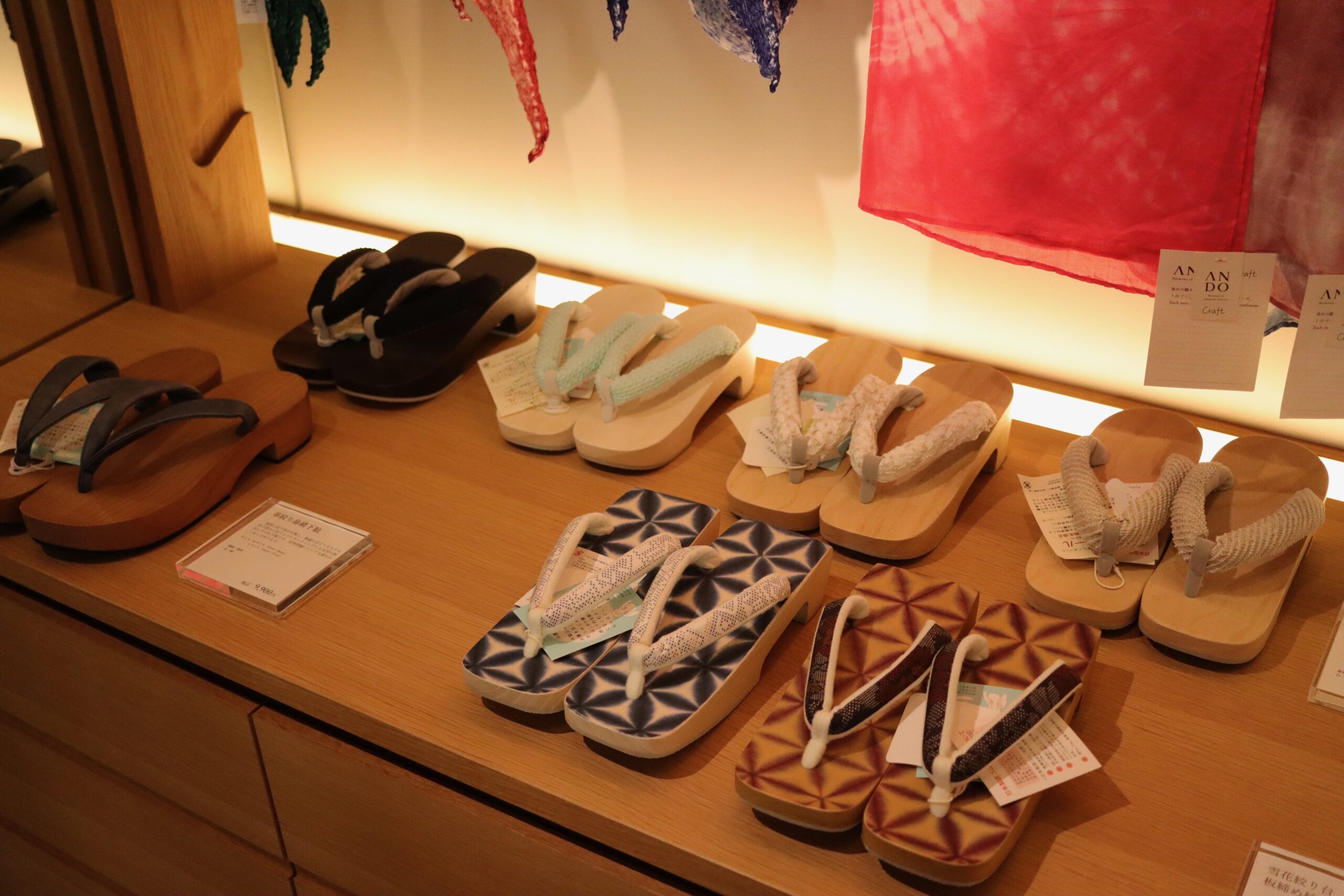
I found zori wooden sandals. Nowadays, Japanese people don’t wear zori on a daily basis; only those in traditional industries tend to wear them.
It’s okay to wear them with a jacket and jeans—something you should try if you want to stand out with a traditional Japanese item.
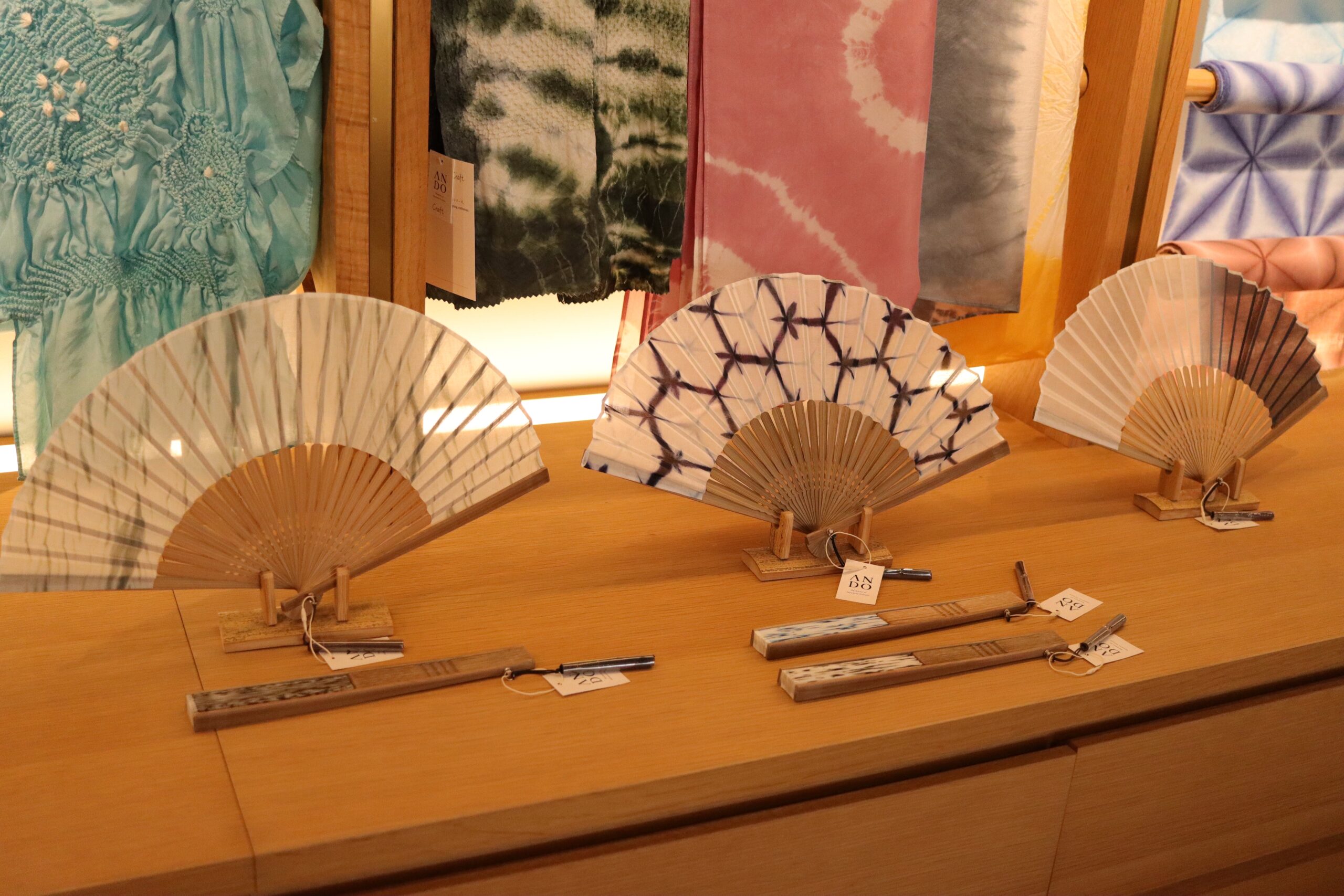
These are tie-dyed collapsible fans called “sensu.” We Japanese sometimes use sensu during summer to cool down, but sensu are not only used for cooling; they are also used as interior decorations.
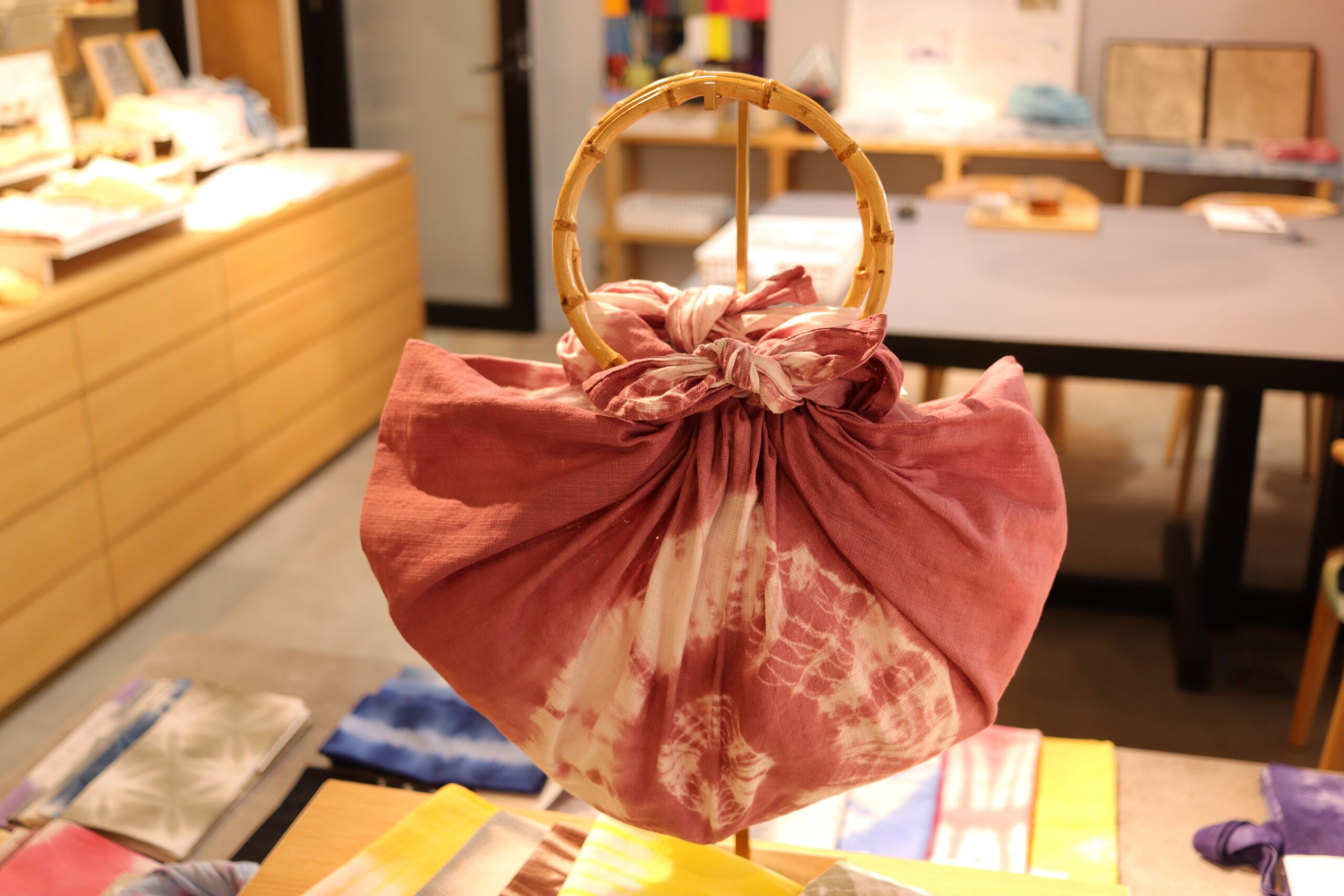
This is an innovative item, which consists of bamboo handles and a furoshiki wrapping cloth. A kind shop clerk told me how to make this bag. It was not so difficult, so once you get the hang of making it, you can soon make it yourself. You can unfasten the furoshiki and use it as a cloth. Originally, furoshiki was used when Japanese went to a public bath house to wrap up their clothes, but nowadays, few Japanese use one because it has become obsolete. I was amazed by the way this shop revived furoshiki into a fashionable item.
Let’s Have a Look at the Finished Tied-dyed T-shirt!
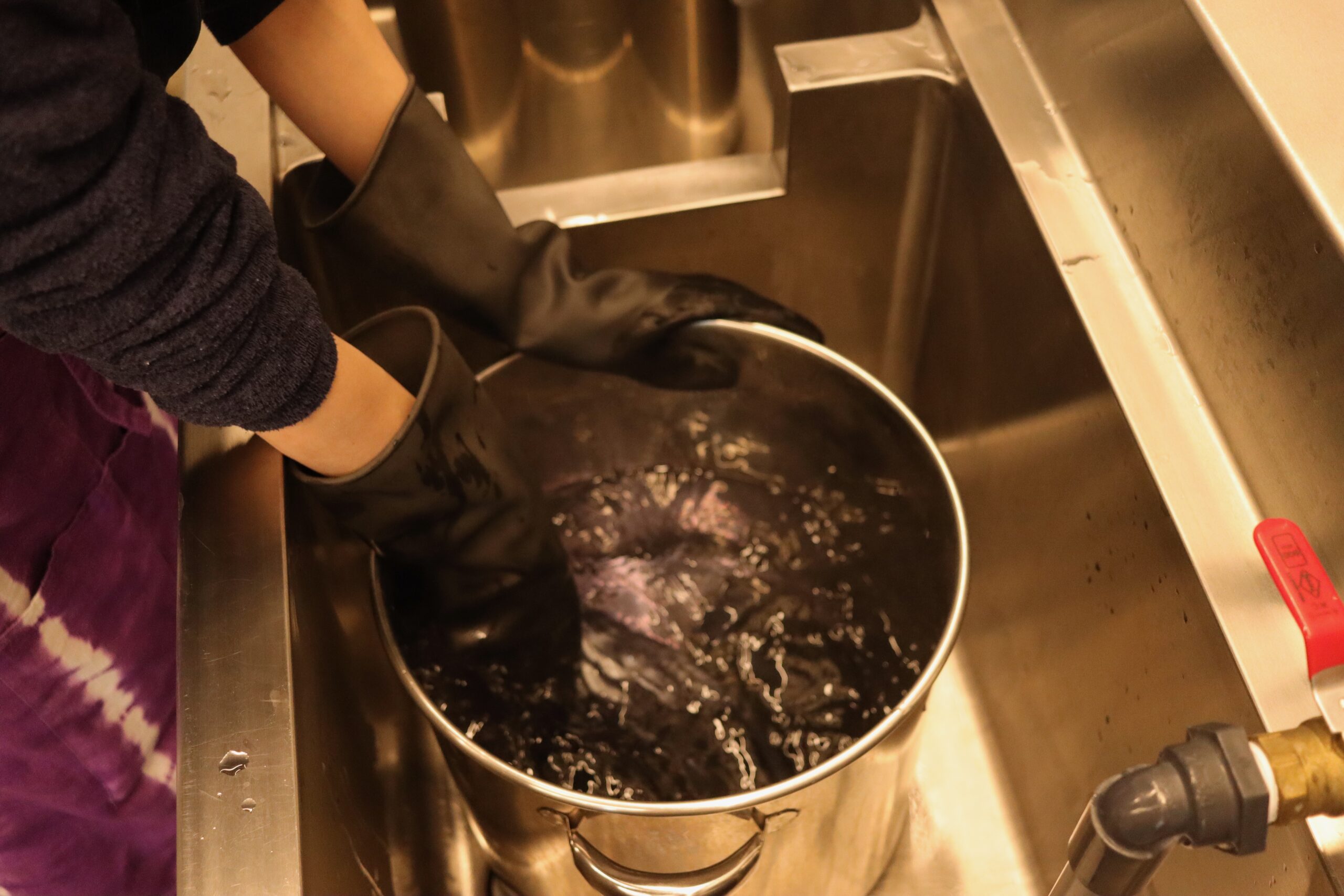
The dyeing process was completed, and an artisan washed the tie-dyed T-shirt, so that the dye wouldn’t come off easily. This process was done by the artisan, so I just watched. I was really looking forward to seeing the finished tie-dyed T-shirt.
Next, I removed the string and rubber bands.
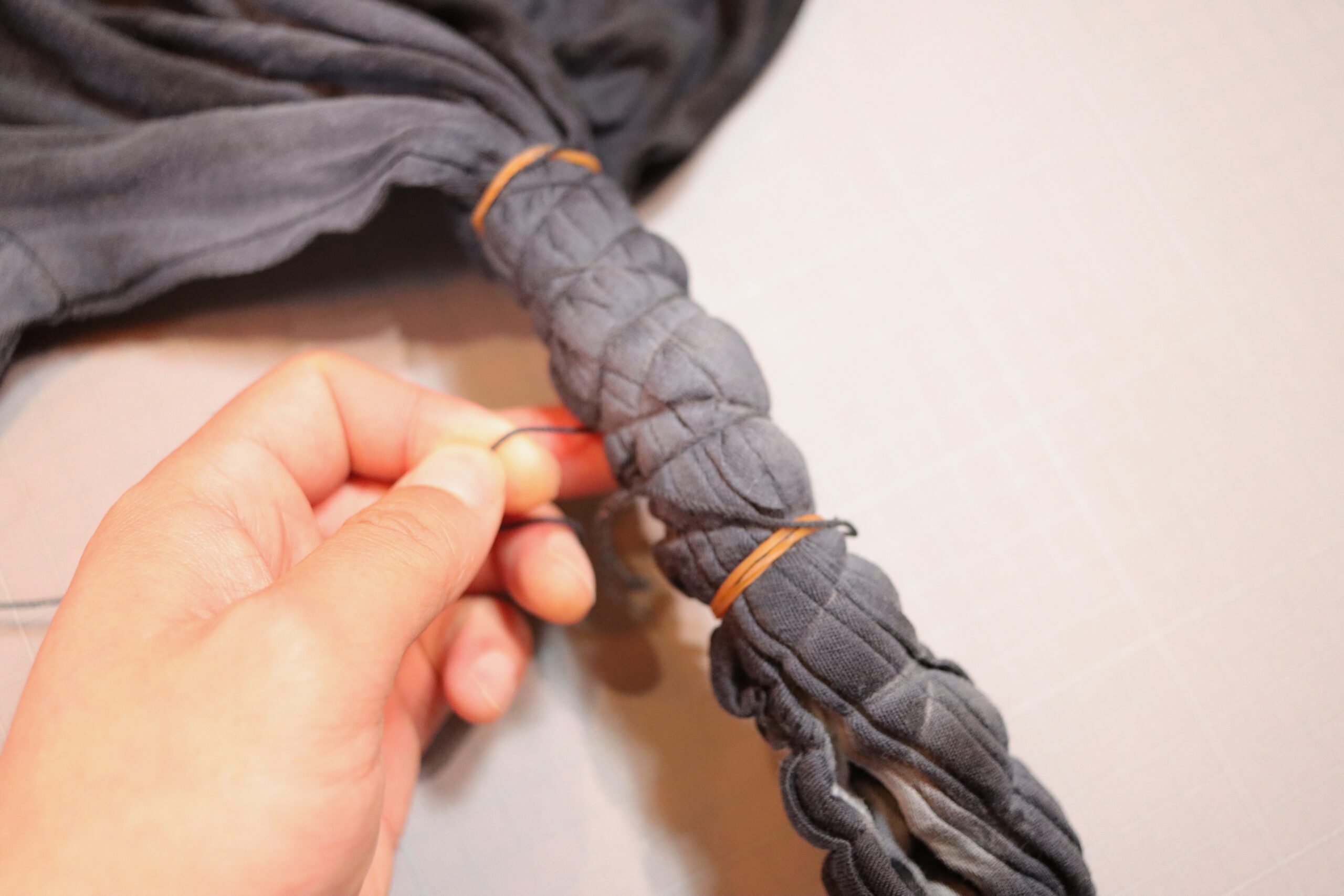
I gradually unfolded the wrinkled T-shirt to see how well it had turned out. My expectations were sky-high!
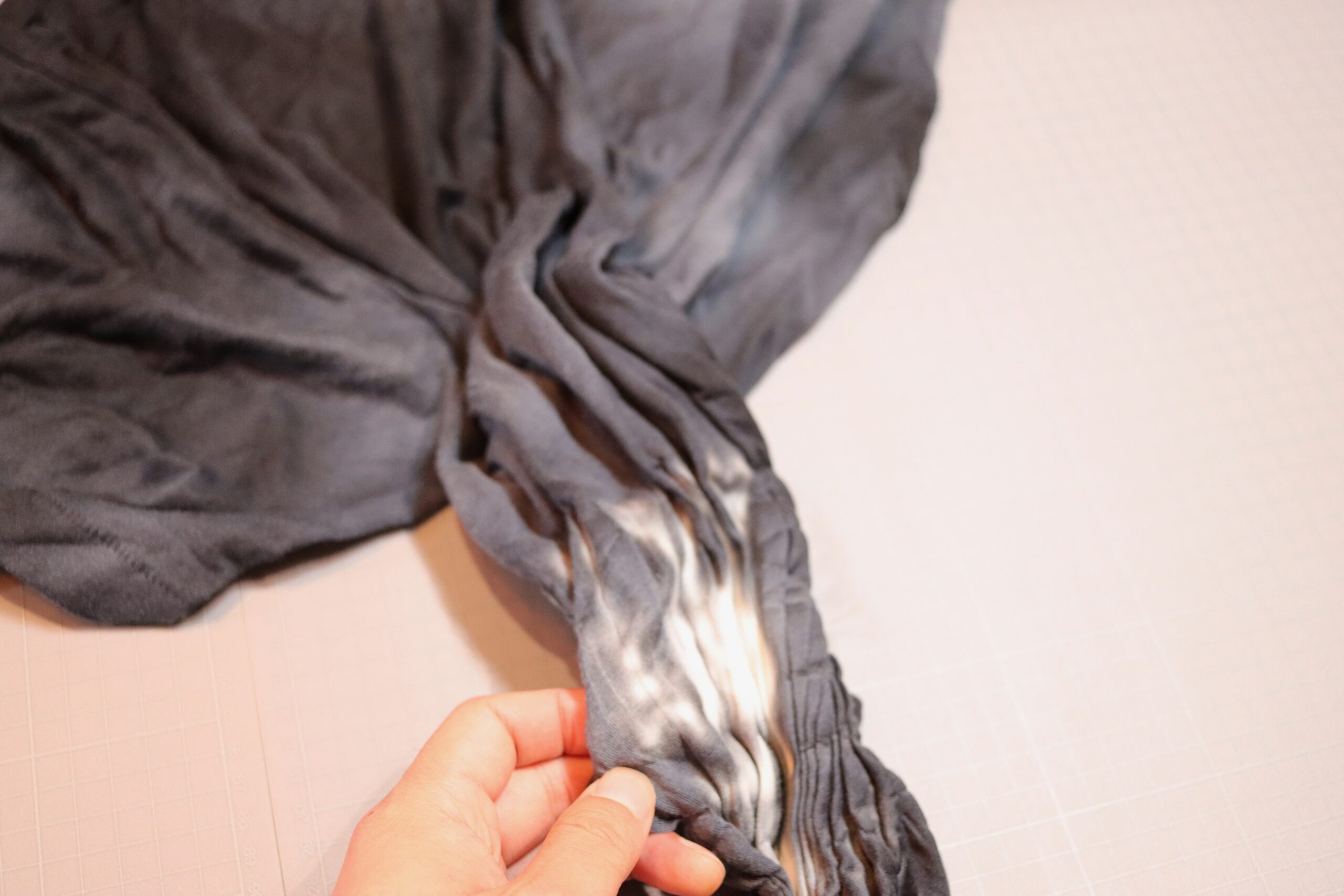
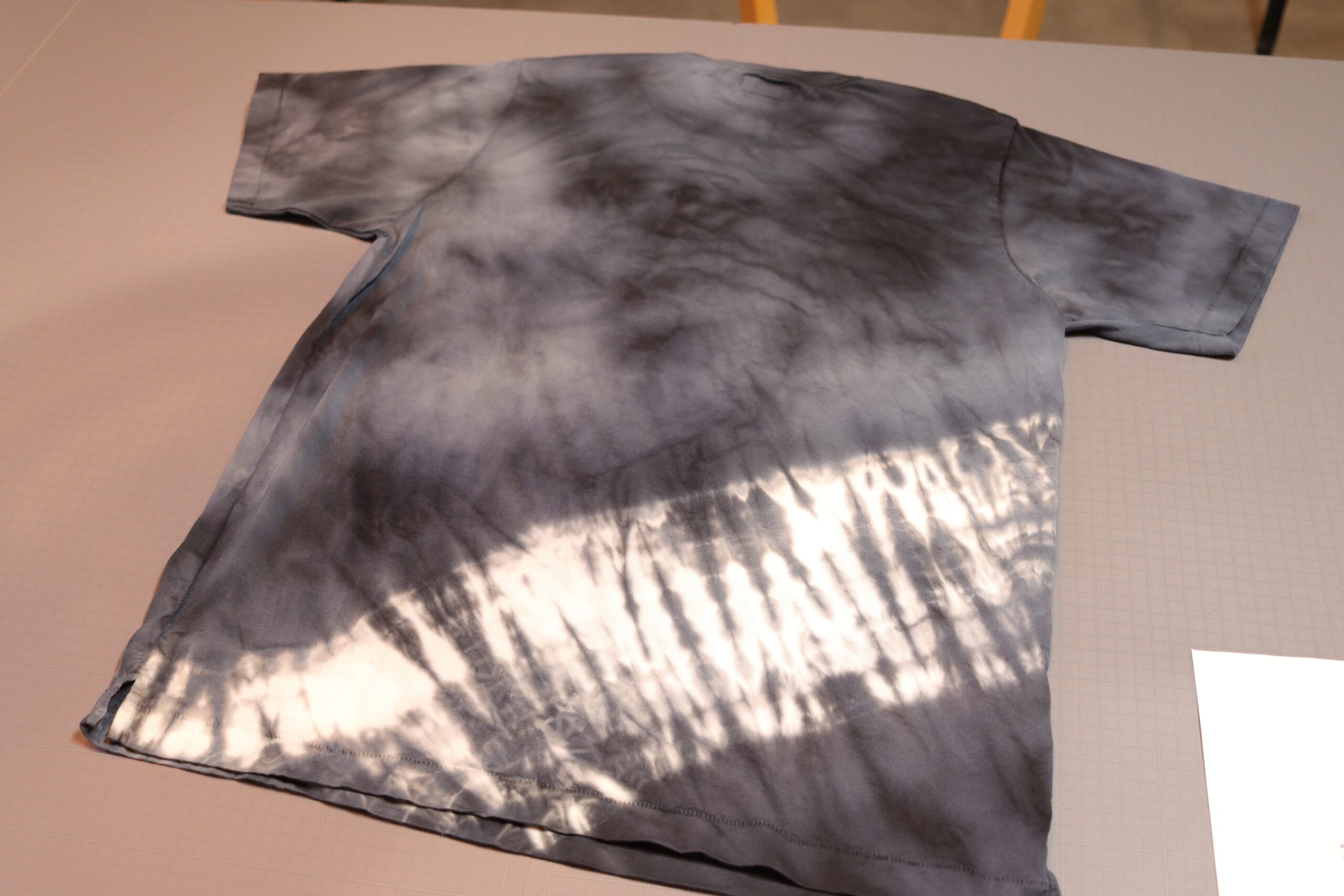
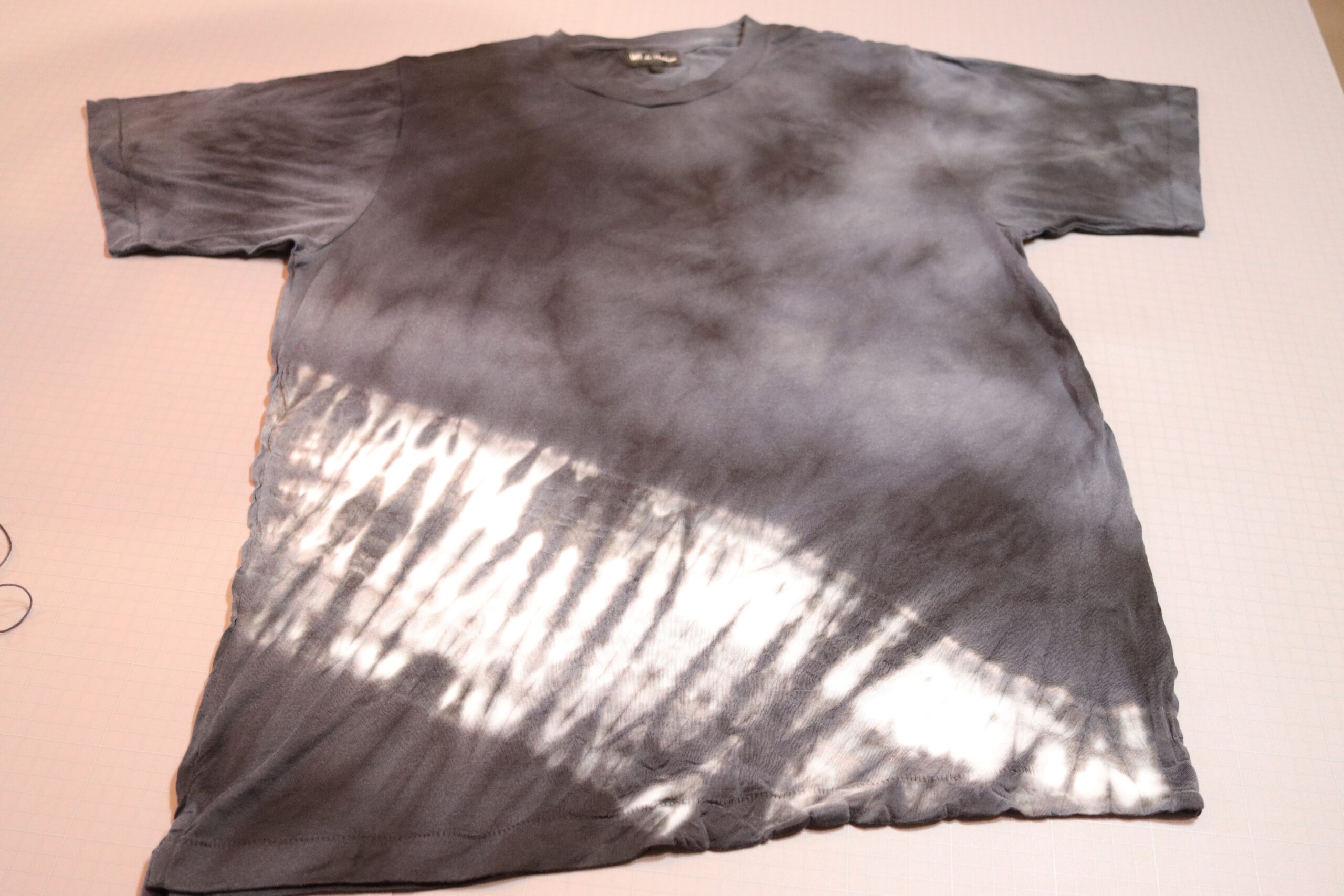
This is the finished tie-dyed T-shirt. The artisan praised me for the beautiful result.
I was so excited because the design was exactly what I wanted!
Summary
This time, I fully enjoyed this workshop experience. I believe few tie-dye companies can match ANDO in terms of quality. You may well fall in love with ANDO if you visit the shop, which is colorful, cozy, and friendly—everything you see will pique your curiosity, as if you were in a fantasy world!
The experience is worth the price. A kind artisan is always there to guide you and help you create your own tie-dyed T-shirt. I was so absorbed that the experience ended before I knew it. Every moment has been indelibly etched in my memory. I will never forget it, and I would love to return to ANDO to buy more fashionable items.